The Ultimate Sports Road Trip Across the USA
Twelve stops, eleven sports and about five thousand miles, from the banking at Daytona to a Friday night rodeo in Fort Worth.
By Miles Ashworth · 4 Sept 2026 · 12 min read · United Kingdom edition
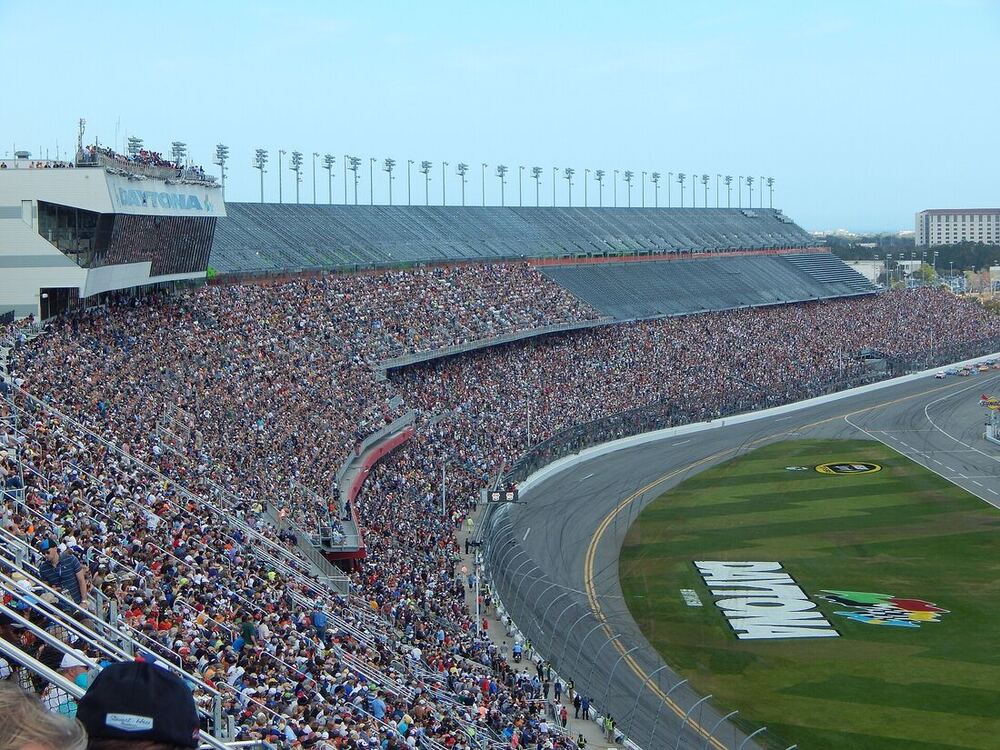 Daytona International Speedway on race day, the 2015 Daytona 500. Photo: Nascarking, via Wikimedia Commons (CC BY-SA 4.0).
Most American road trips are organised around scenery. This one is organised around sport, which turns out to be a better way to cross the country, because sport is where America keeps its arguments about itself. You get the cathedrals, the ridiculous speed, the film sets people still drive hundreds of miles to stand in, and a decent share of the good roads anyway.
The route below runs from Florida to Texas by way of Nevada, roughly five thousand miles, twelve stops, eleven sports. You could do it in three weeks. You would enjoy it more in five.
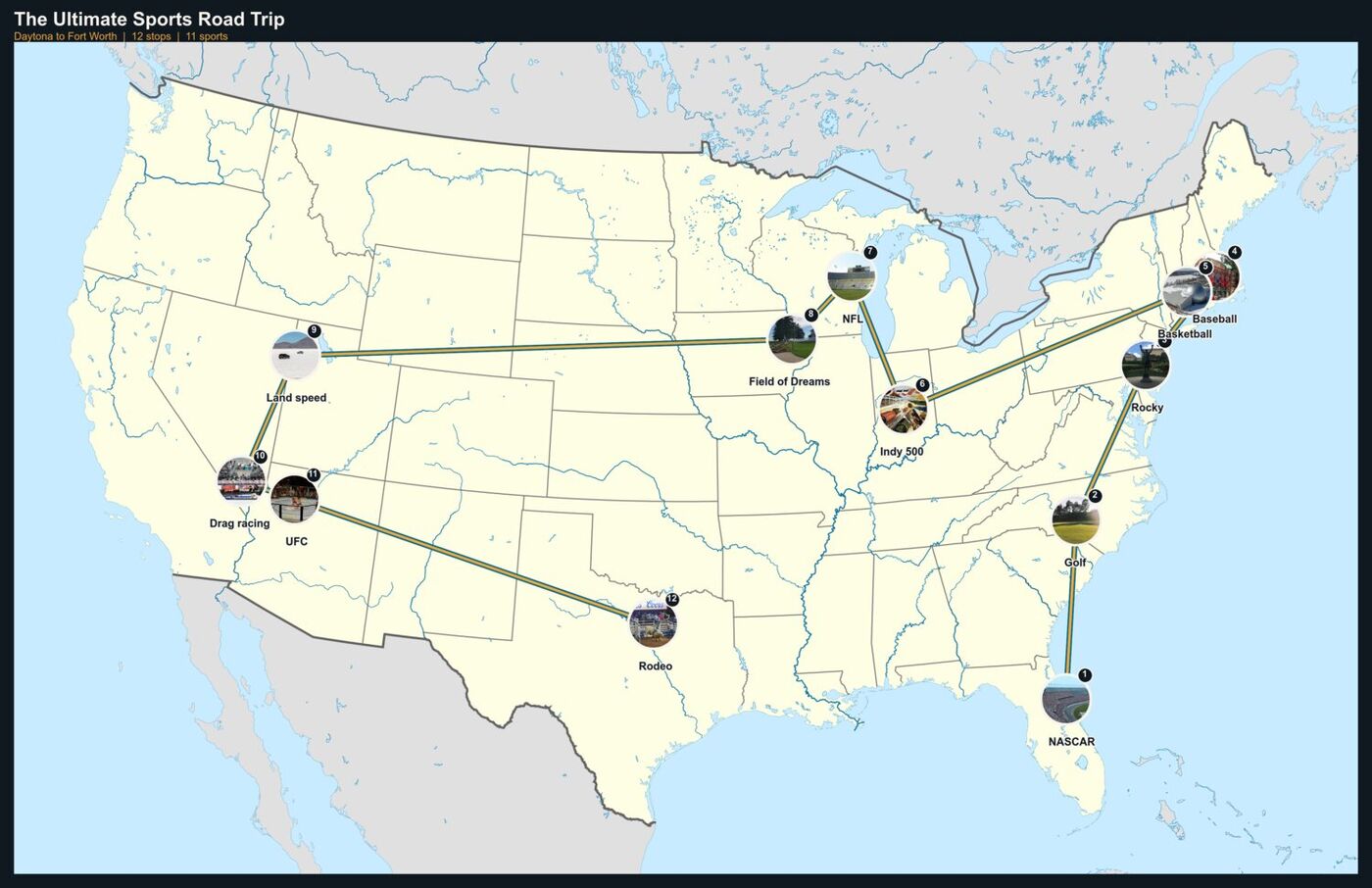 The route, Daytona to Fort Worth. Each stop is pinned with its own photograph. Base map: Wikimedia Commons (CC BY-SA 3.0), positions plotted from the map's published projection.
Start at Daytona, Because Everything Else Is Quieter
Daytona International Speedway opened in 1959, built by NASCAR founder Bill France Sr to replace the racing that had been happening on the sand at the Daytona Beach Road Course. He built it steep on purpose: the turns are banked at 31 degrees, the start-finish line at 18, high enough to let the cars carry speed and to let the crowd actually see them do it.
It is a 2.5 mile tri-oval with around 101,500 permanent seats, expandable to 125,000. The Daytona 500 has been run here since the track opened, and it is NASCAR's most prestigious race despite being the season opener rather than the finale, which is a quirk no other major sport would tolerate.
Stand at the fence during a race and the noise arrives in your chest before your ears. Come on a quiet day and you can take a tour that puts you on the banking, which is far steeper underfoot than it looks on television.
Pinehurst, and the Other Kind of Silence
Six hundred miles north, in the North Carolina sandhills, is the opposite experience.
Pinehurst is a golf village in the most literal sense: a small town built around a cluster of courses, laid out among longleaf pines on sandy soil that drains fast and plays firm. The village has hosted more championship golf than almost anywhere in the country, and unlike the more famous private clubs further south, you can actually book a tee time.
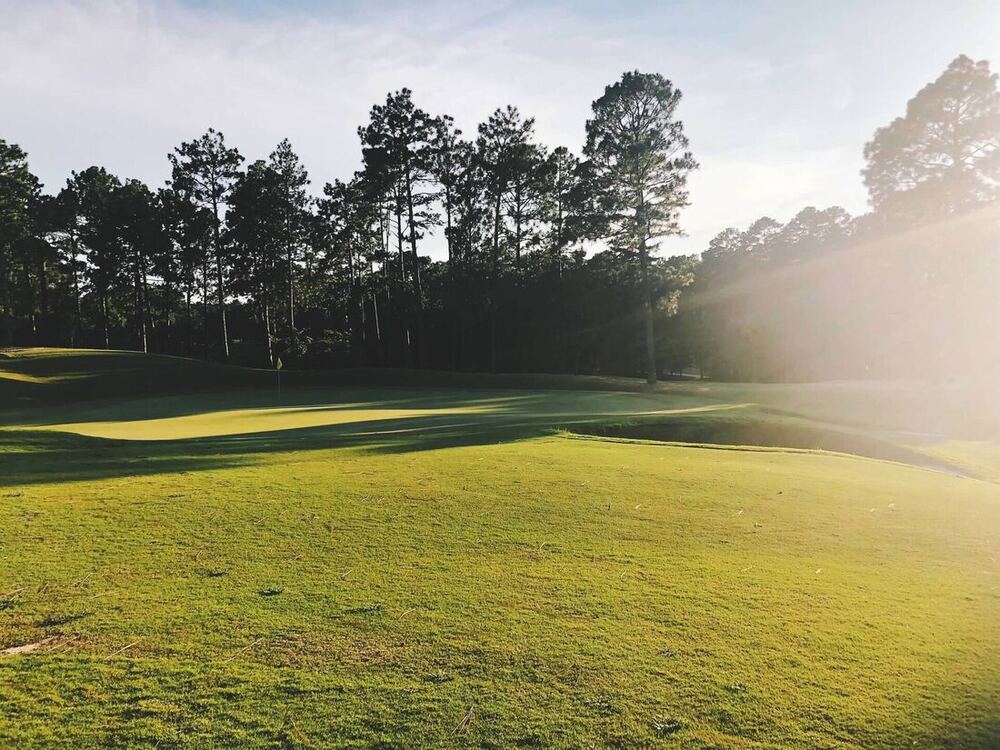 A course at Pinehurst, North Carolina, where sandy soil and longleaf pine define the golf. Photo: Julianibarra, via Wikimedia Commons (CC0).
The contrast with Daytona is the point of doing them back to back. One is the loudest place in American sport. The other asks you to whisper.
Philadelphia: Run Up the Steps, Everyone Does
The 72 stone steps outside the Philadelphia Museum of Art are the most famous training montage in cinema, and the city has long since given up pretending otherwise. There is a bronze Rocky Balboa at the bottom, arms up, and a queue of people waiting to copy the pose.
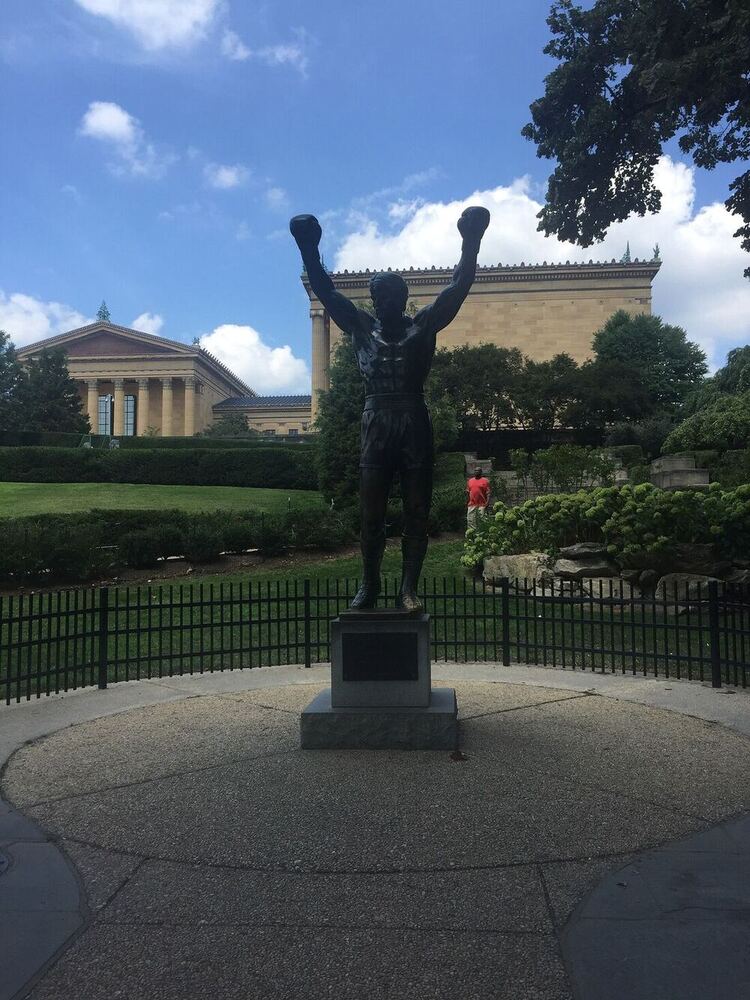 The Rocky statue below the steps of the Philadelphia Museum of Art. Photo: Zakarie Faibis, via Wikimedia Commons (CC BY-SA 4.0).
It is a film set rather than a sporting venue, and it is on this list precisely for that reason. American sport and American cinema have fed each other for a century, and this is the spot where the feedback loop is most visible. Run up them. You will be slower than you expect.
Boston: The Oldest Room in Baseball
Fenway Park opened in 1912 and is the oldest active ballpark in Major League Baseball. That age is the whole experience: the sightlines are awkward, the seats are narrow, and none of it has been smoothed away.
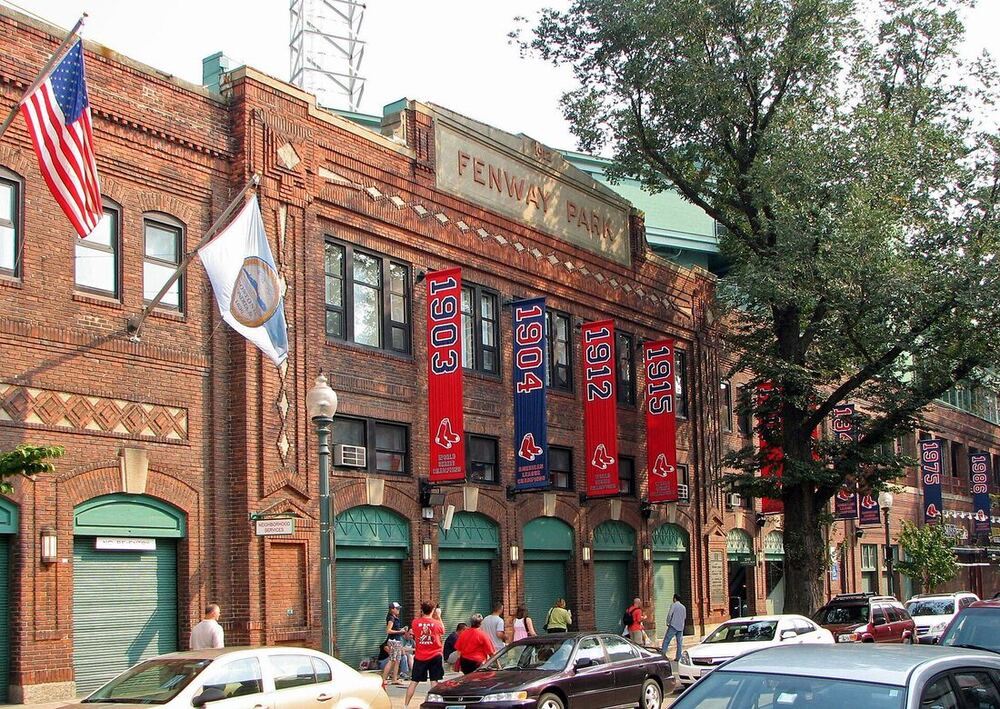 The main entrance to Fenway Park on Yawkey Way, Boston, with the championship banners along the brick. Photo: Bernard Gagnon, via Wikimedia Commons (CC BY-SA 3.0).
The left field wall, the Green Monster, stands just over 37 feet. It is that tall because of a 1934 rebuild that replaced a ten-foot grass incline known as Duffy's Cliff and had to deal with the drop between the field and Lansdowne Street outside. A wall that size turns routine fly balls into wall-scrapers and hard line drives into singles, which changes how the game is played rather than just how it looks.
The scoreboard at its base is still updated by hand, from behind the wall, during play. Capacity is around 37,300, which by modern standards is small, and that is the other half of the appeal.
Springfield: Where the Game Was Actually Invented
Ninety miles west of Boston, basketball was invented in Springfield, Massachusetts, by James Naismith in 1891. Not developed there, not popularised there. Invented, as a solution to the problem of what to do with a gym full of restless students in a New England winter.
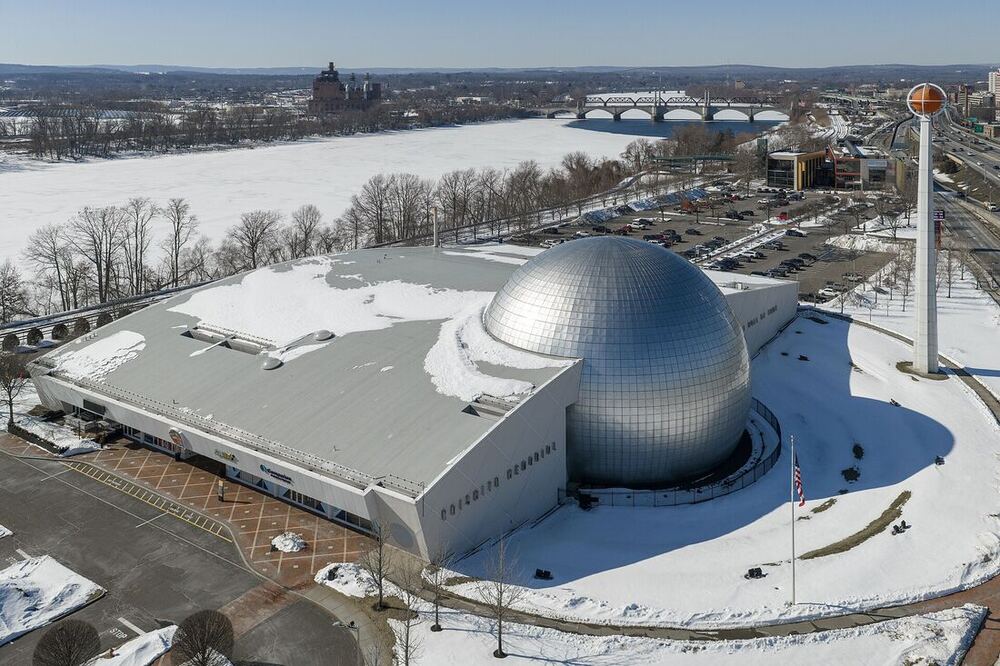 The Naismith Memorial Basketball Hall of Fame at Springfield, Massachusetts. Photo: Quintin Soloviev, via Wikimedia Commons (CC BY 4.0).
The Hall of Fame that commemorates it sits at 1000 Hall of Fame Avenue in a building that is impossible to mistake for anything else: a metallic silver sphere flanked by two rhombuses, lit at night, opened in June 2002 at a cost of 47 million dollars. There is a full court inside where you can shoot.
Indianapolis: The Biggest Venue in the World
The Indianapolis Motor Speedway opened in 1909 and is, by capacity, the largest sports venue on the planet. Permanent seating is 257,325. Total capacity, counting the infield, is around 400,000. Those numbers are difficult to hold in your head until you stand at the fence and try to see the far end.
The original dirt surface failed badly enough that the track was repaved with 3.2 million bricks, and locals had nicknamed it the Brickyard before the job was even finished. A three-foot strip of those original bricks is still exposed at the start-finish line. Winners kiss it.
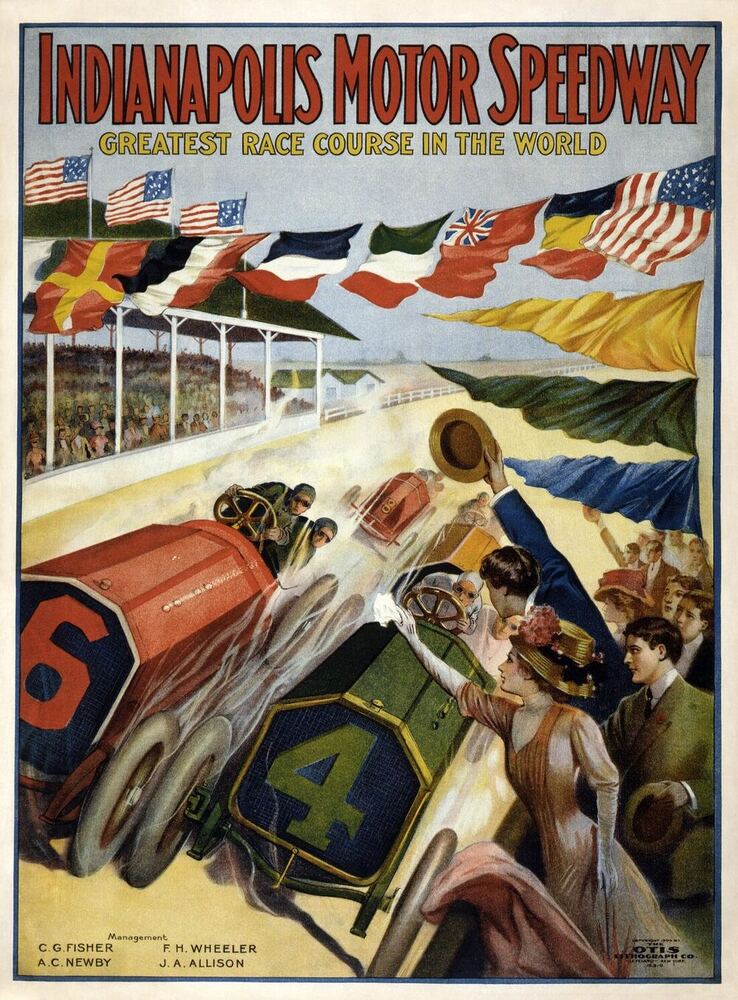 A 1909 Otis Lithograph Company poster advertising the Indianapolis Motor Speedway as the greatest race course in the world, printed the year the track opened. Public domain, via Wikimedia Commons.
The first Indianapolis 500 was run in 1911, on Memorial Day, in front of an estimated 80,000 people. Ray Harroun won it at an average of 74.602 mph, which sounds sedate until you remember what he was driving and what the surface was made of.
Green Bay: A Football Team Owned by Its Town
Green Bay is a small city in Wisconsin with an NFL team owned by its own residents rather than by a billionaire, which makes Lambeau Field the least corporate major stadium in American sport.
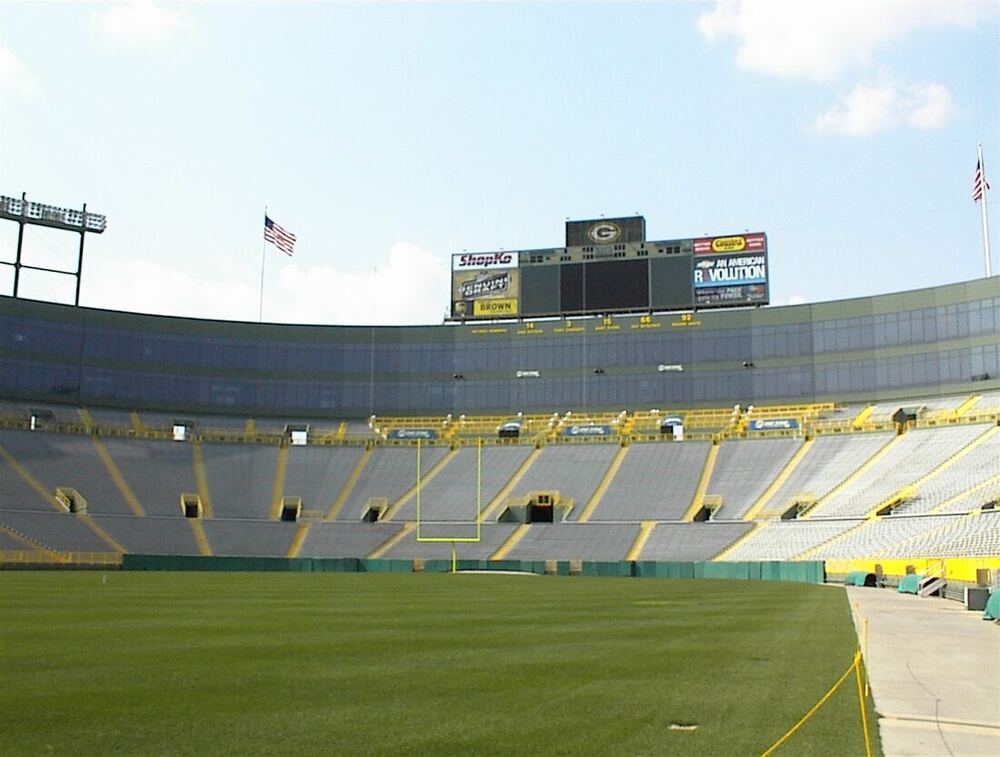 The bowl at Lambeau Field, Green Bay, empty and out of season. Photo via Wikimedia Commons (CC BY-SA 3.0).
It is known as the Frozen Tundra for good reason, and the correct time to visit is December, when the weather is genuinely hostile and the ritual of turning up anyway is the entire point. Go in summer and you get an empty bowl and a very good tour. Go in winter and you understand it.
Dyersville: The Cornfield That Refused to Go Away
In 1989 a film crew carved a baseball diamond out of an Iowa cornfield, shot Field of Dreams on it, and left. The farm is still there, the diamond is still mown, the white farmhouse still has its porch, and people still turn up unannounced to play catch on it.
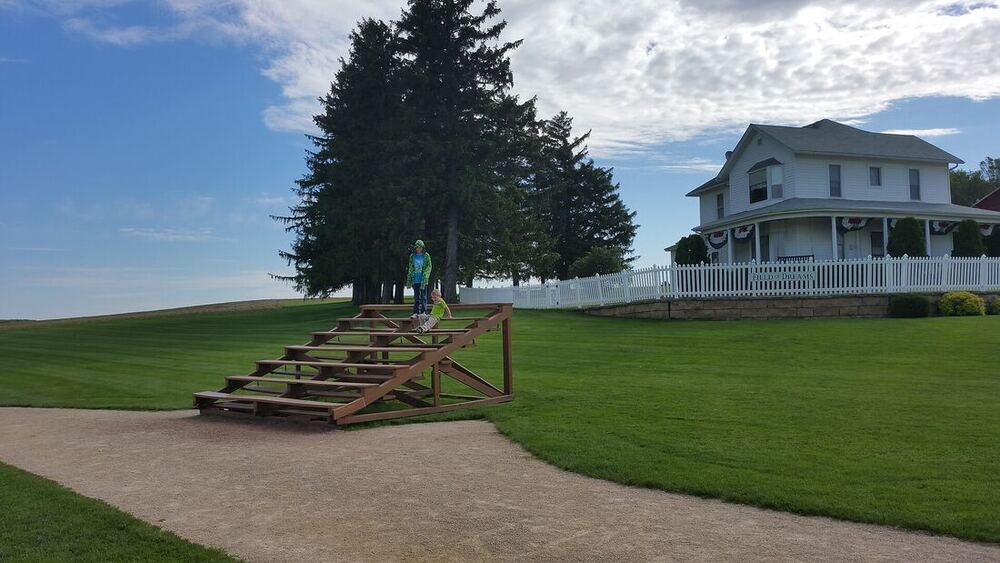 The Field of Dreams movie site at Dyersville, Iowa, kept as it was left after filming. Photo: Jana Taylor, via Wikimedia Commons (CC BY-SA 3.0).
Nothing about it is a stadium. That is why it belongs on the route. It is the clearest example of the thing this trip is really about: a place that matters because of what people decided it means, rather than because of what was built there.
Bonneville: Where Speed Stops Being About Racing
West across the Rockies, the Bonneville Salt Flats in Utah are a dead-flat white plain left behind by an evaporated lake. There is no opponent here and no grandstand. There is a measured mile and a clock.
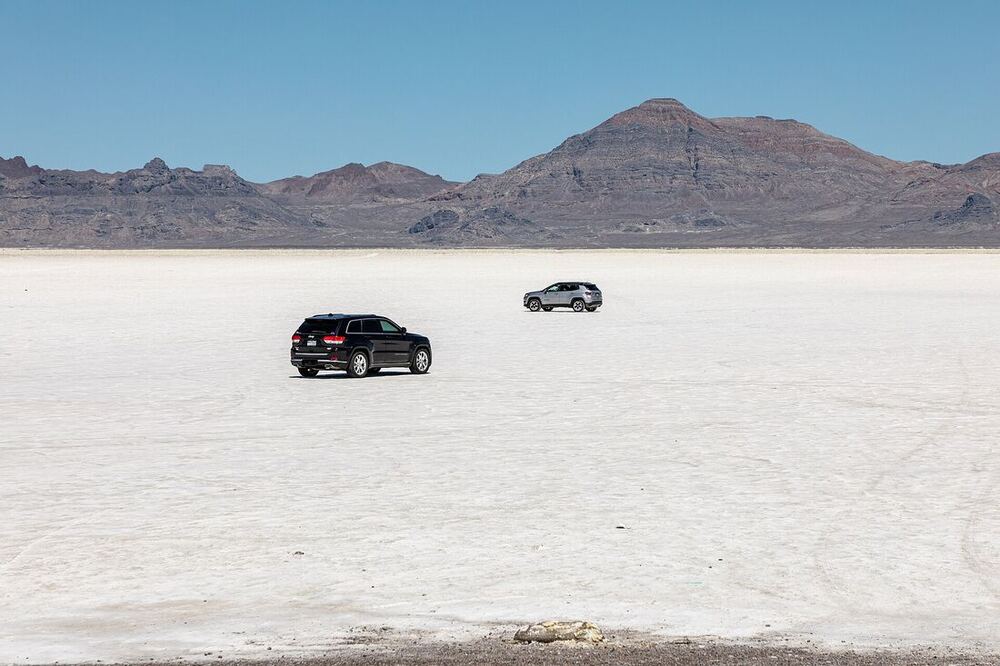 The Bonneville Salt Flats near Wendover, Utah. Photo: Dietmar Rabich, 2022, via Wikimedia Commons (CC BY-SA 4.0).
Land speed record attempts have run here for a century. The salt is hard enough to drive on, the horizon is far enough away to matter, and the surface condition varies year to year, which is why meetings get cancelled and why the people who come here talk about the salt the way sailors talk about weather.
Las Vegas, Part One: The Shortest Race in Motorsport
End the trip on the shortest race in the book. Top Fuel drag racing is roughly four seconds of the most violent acceleration in motorsport, run over a straight line, twice per pairing, all day.
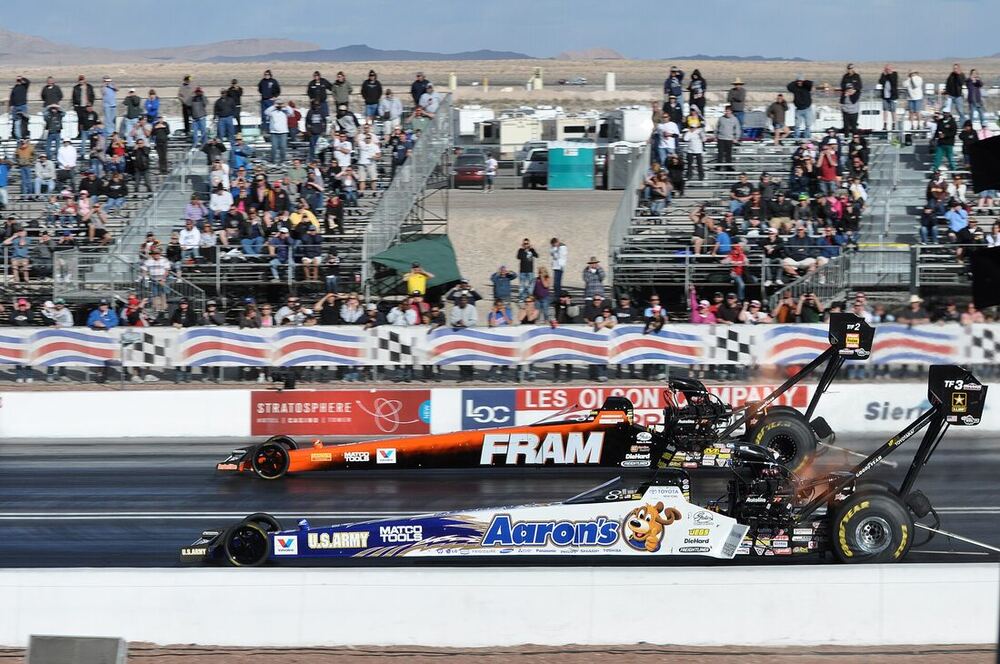 The Top Fuel final at Las Vegas Motor Speedway, 1 April 2012, Spencer Massey beating Antron Brown. Photo: GSenkow, via Wikimedia Commons (CC BY-SA 3.0).
It is the opposite of everything else on the route. No history to absorb, no cathedral to walk around, no film to have seen first. Just the burnout, the stage lights, and a noise that rearranges your ribcage. Then it is over, and they do it again.
Las Vegas, Part Two: The Octagon
Stay in Las Vegas for the last stop, because the city is also the home of the UFC, and a fight night is the right way to finish a trip that started with stock cars.
Mixed martial arts is the youngest sport on this route by a distance. Fenway had been standing for eighty years and Indianapolis for eighty-three before the UFC ran its first event. In that time it has gone from something closer to a spectacle than a sport to a regulated, weight-classed competition with a global calendar, and Las Vegas is where the biggest cards land.
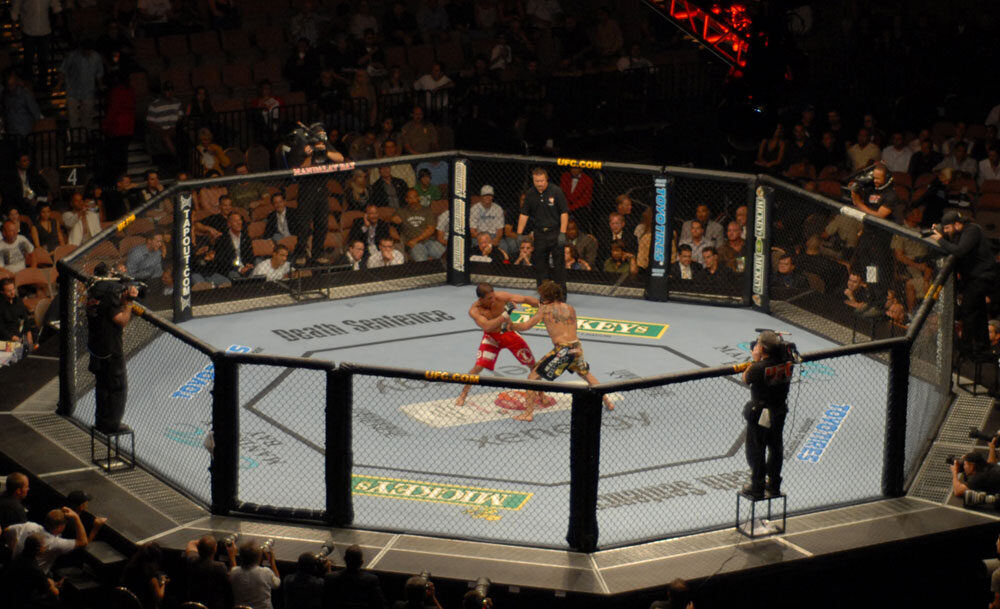 The octagon at UFC 74: Respect, Mandalay Bay Events Center, Las Vegas, 25 August 2007. Clay Guida faces Marcus Aurelio on the preliminary card. Photo: Lee Brimelow, via Wikimedia Commons (CC BY 2.0).
What surprises people who only know it from clips is how quiet the arena goes between rounds, and how small the octagon looks from the upper tier. Thirty feet across, two people, no ball, no clock stoppage worth speaking of. After thousands of miles of venues built to hold a hundred thousand, a room where everyone is watching the same thirty feet of canvas is a jolt.
Fort Worth: Finish Where the Sport Was a Job First
The last leg turns back on itself. From Las Vegas you drive southeast across Arizona and New Mexico into Texas, about 1,200 miles, which is the longest single hop of the trip and the reason the route line on the map crosses its own path.
It is worth it, because Fort Worth is where this whole list finds its oldest ancestor. Every other sport on the route was invented as a sport. Rodeo was invented as work. Roping, riding and handling cattle were ranch skills before anybody thought to time them, and the competition grew out of men arguing about who was best at their job.
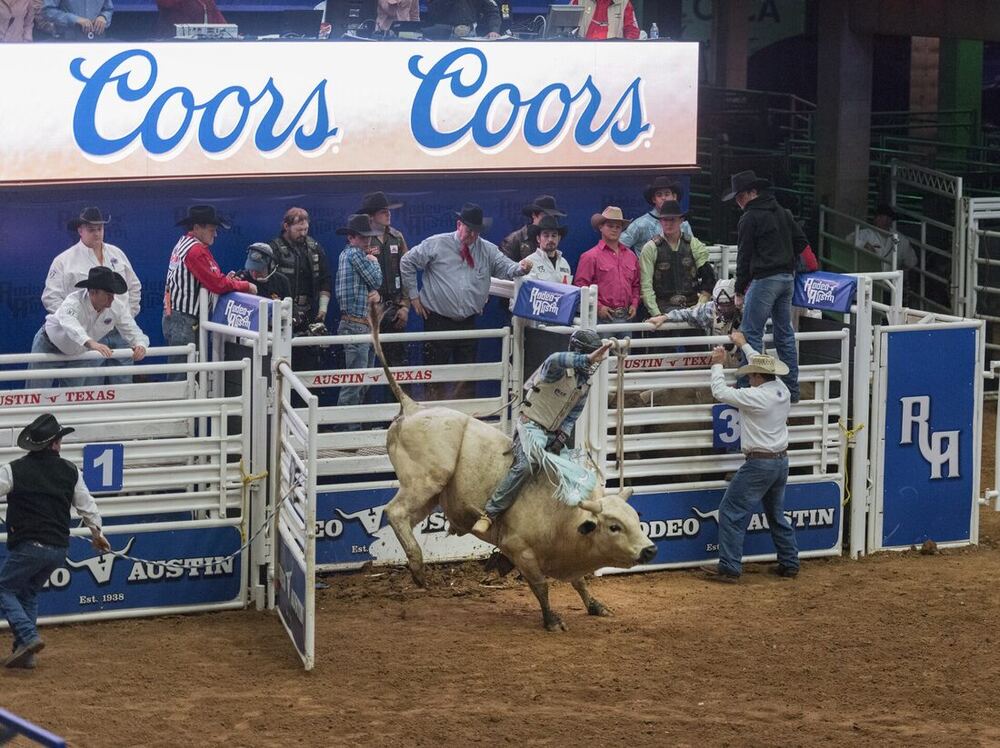 Bull riding at Rodeo Austin, the city's annual stock show and rodeo. Photo: Carol M. Highsmith, via Wikimedia Commons (public domain).
The Fort Worth Stockyards is the place to see it. Cowtown Coliseum was built there in 1908 and was the first indoor rodeo arena in the United States, which makes it the oldest purpose-built venue on this entire route, older than Fenway by four years and older than the first Indianapolis 500 by three.
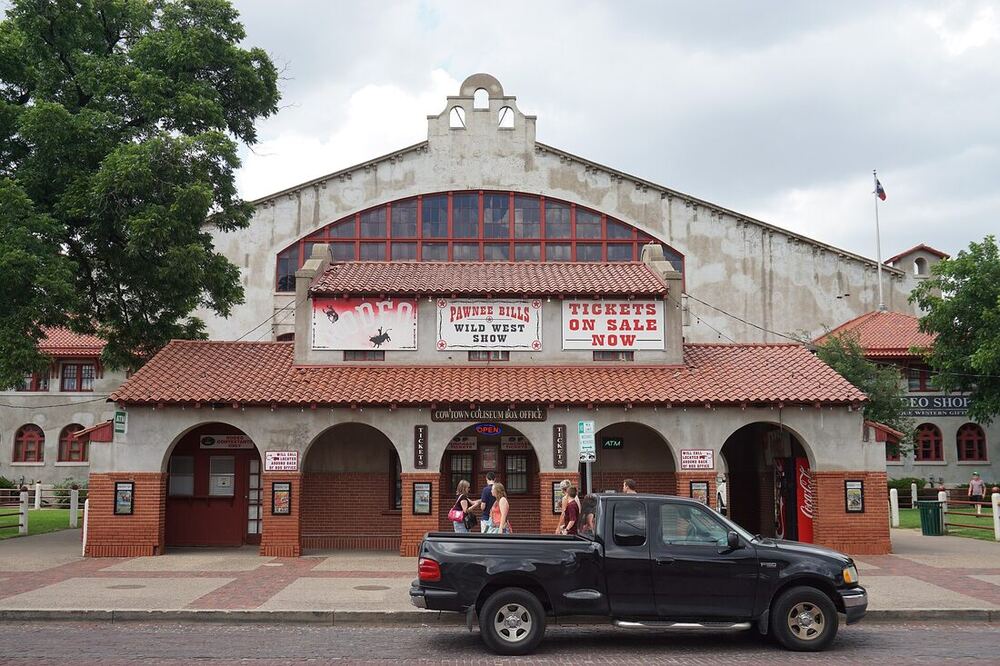 Cowtown Coliseum and its box office in the Fort Worth Stockyards, Texas. Photo: Michael Barera, 2016, via Wikimedia Commons (CC BY-SA 4.0).
It seats 2,400, which after Indianapolis feels like somebody's front room, and the Stockyards Championship Rodeo has run there almost every Friday and Saturday since 1992. Professional Bull Riders events land there too. You do not need to time your trip around a season, which is the opposite of nearly everything else on this list.
Eight seconds is the target on a bull. That is the whole event. After Daytona's 500 miles, the Indianapolis 500, a marathon of stadium tours and four thousand miles of driving, finishing on a sport measured in single-figure seconds is the right joke to end on.
Making It Work
The order above runs Florida to Texas the long way round, up the east coast, west across the middle, then back southeast for the finish. Reverse it if you would rather end at the Atlantic. Fort Worth is the one stop that works on any weekend of the year, so it survives being moved.
Check schedules before you commit to anything. Half these venues are worth seeing empty and half are only worth seeing full, and the two lists are not the same. Fenway, Lambeau, Daytona, a UFC card and a Friday night at Cowtown all want a crowd. Bonneville, Dyersville and the Rocky steps are better without one. Indianapolis is the rare place that works either way, because the scale does not need people to explain it.