Smoke, Heat and Moved Marathons: Climate Change Is Rewriting Sport
From a tennis player retiring mid-match in a haze of bushfire smoke to an Olympic marathon moved 500 miles north to escape the heat, climate change isn't a future problem for sport: it's already changing where and how games are played.
By Miles Ashworth · 27 Aug 2026 · 2 min read · United Kingdom edition
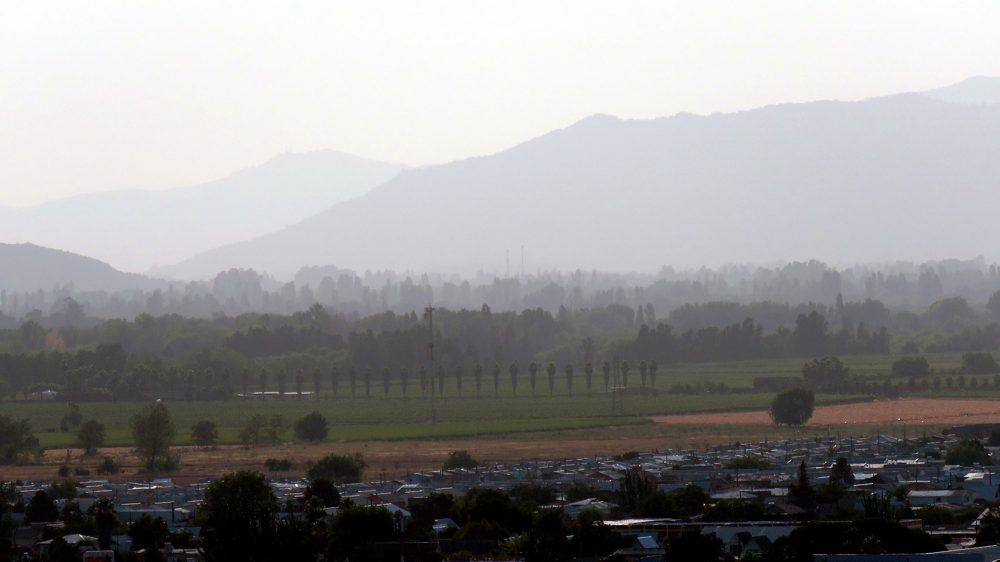 RL GNZLZ / Wikimedia Commons (CC BY-SA 2.0)
The Australian Open has had a heat policy since 1998, introduced after player consultation. A fixed-threshold version -- play suspended above 40°C air temperature or 32.5°C wet-bulb globe temperature -- held for most of the 2000s and 2010s, before being replaced in 2019 by a more responsive 1-5 scale that also factors in radiant heat, humidity and wind.
The policy has been tested in public more than once. At the 2014 Australian Open, temperatures hit 43.9°C, but the heat policy was invoked on only a single day of the tournament; players reported hallucinations and collapse on court. In 2023, play was suspended on non-roofed courts once the temperature passed 98°F (36.7°C).
The clearest single moment came in January 2020, and it wasn't heat -- it was smoke. On 13 January, during Australian Open qualifying, Melbourne's air quality was rated the worst in the world that day because of bushfire smoke drifting in from the fires burning across the country. Slovenian player Dalila Jakupović retired mid-match after a coughing fit brought on by the haze. The tournament's response became an event in itself: a "Rally for Relief" charity exhibition, with Novak Djokovic, Roger Federer, Nick Kyrgios and Coco Gauff among those who played, raising money for bushfire relief.
The Olympics has made the same calculation. In 2019, the IOC moved the marathon and race walk events for the 2020 Tokyo Games roughly 500 miles north to Sapporo, citing average August temperatures around 4°C cooler than Tokyo. It's worth being honest about how that played out: on the actual race day, Sapporo's 7am start temperature was 26.0°C -- not much different from what Tokyo would have offered. The reasoning behind the move was sound; the specific payoff on the day was smaller than advertised. That's a more useful detail for readers than pretending the fix was perfect.
There's a broader, widely-discussed question about how many future Winter Olympics hosts will still have reliable natural snow within a few decades -- but the specific studies and figures behind that claim need their own dedicated research pass before this piece states any numbers on it.
None of this is speculative. It's a sport that has already rewritten its own rulebook -- twice, in tennis's case -- around a climate that stopped cooperating with the old assumptions.