From Feathers to Lasers: How Golf's Rules Chased Its Technology
Four times in three centuries, a new ball, shaft, clubhead or measuring tool has outrun golf's rulebook, and the rulebook has always caught up afterwards, not before.
By Miles Ashworth · 27 Aug 2026 · 2 min read · United Kingdom edition
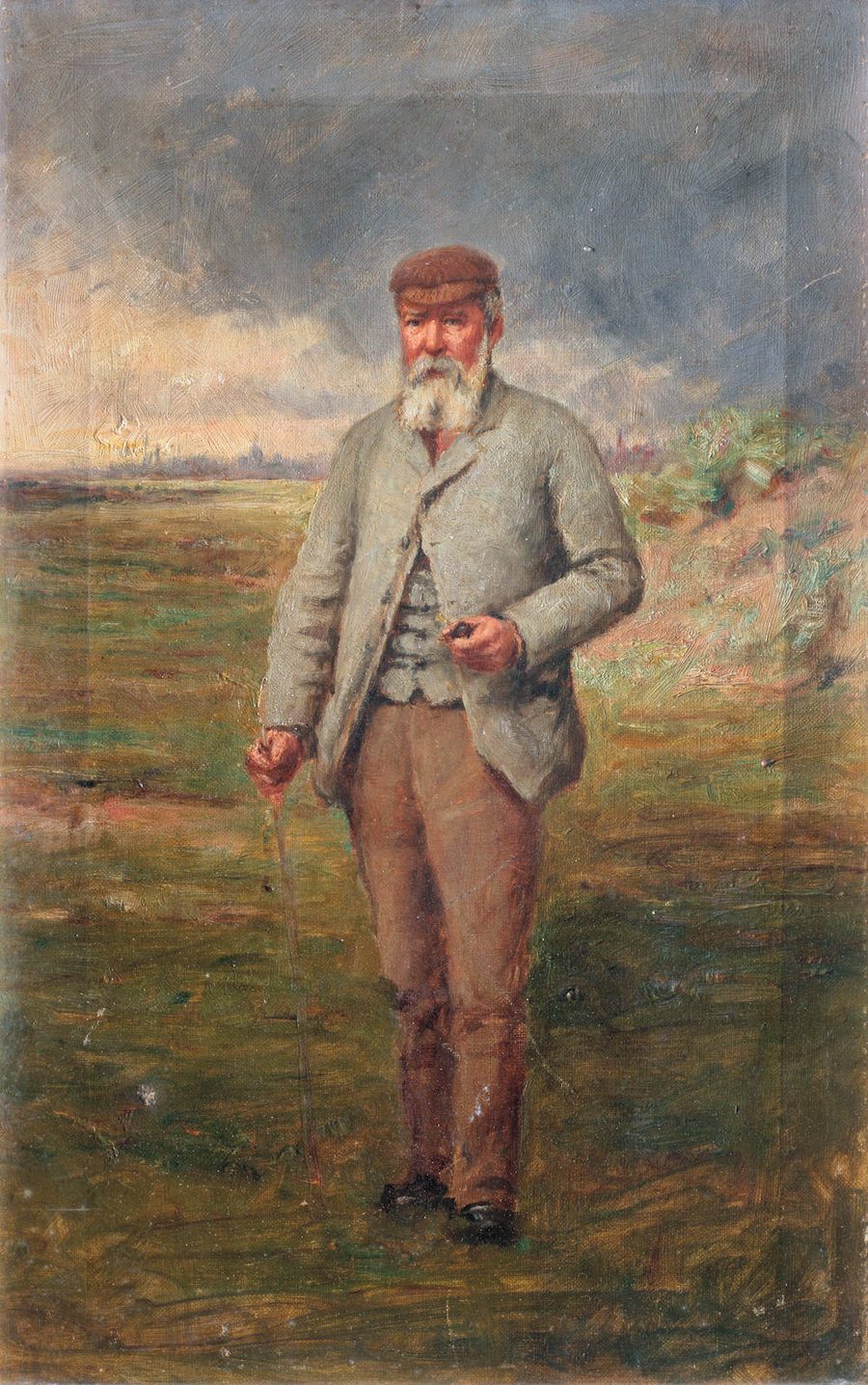 Scottish School, c.1900 — public domain, via Wikimedia Commons
In 1744, the Gentlemen Golfers of Edinburgh drew up 13 rules for a competition on Leith Links — the oldest surviving code for the game. Golf's rulebook and its equipment have been chasing each other ever since. The gutta-percha ball, arriving around 1848, replaced the featherie — a leather ball so labour-intensive to hand-stuff with feathers that a skilled maker could only produce a handful a day — and made the game affordable to far more players. Fifty years later, in 1898, Coburn Haskell's rubber-wound-core ball flew further still, leaving guttie-era courses suddenly too short and starting golf's first real "equipment versus course" argument.
Clubs went through the same pattern more slowly. Hickory shafts lasted into the 1920s, and the USGA (1924) and R&A (1929) didn't even agree on when to let steel replace them — it took until 1952 for the two bodies to agree a single Uniform Rules of Golf. Karsten Solheim's forgiving, perimeter-weighted irons in the 1960s and 70s, TaylorMade's first steel "metal wood" in 1979, graphite shafts through the 1970s and 80s, and titanium clubheads in the 1990s all pushed the same way, until the R&A and USGA eventually capped clubhead size outright at 460cc.

The most recent shift wasn't in what hits the ball at all — it was in how players are allowed to measure the ground in front of them. For most of the game's history, using any kind of device to judge distance was against the rules. That changed in 2006, when the R&A and USGA jointly approved a Local Rule permitting laser and GPS distance-measuring devices in competition — the rule that makes a rangefinder like the WOSPORTS L16 a legal piece of golf equipment today rather than a training aid left in the bag on match day.
None of these shifts happened because a governing body decided, in the abstract, that golf needed to change. Each one followed a new ball, shaft, clubhead or measuring tool that had already changed what golfers could do — and the rules adjusted afterwards to catch up. The R&A and USGA's own 2020 Distance Insights Report shows the same argument still running today. Golf's rules have never really led the technology. They've followed it, argued with it, and eventually made peace with it — right up to the rangefinder now standard in plenty of golf bags.