The Robots Are Already Reffing: How AI Is Reshaping Modern Sport
From offside calls in the Premier League to injury forecasts at 50 professional clubs, artificial intelligence has quietly become part of the sporting machine, with real deployments, not just demos.
By Miles Ashworth · 26 Aug 2026 · 2 min read · United States edition
 Premier League
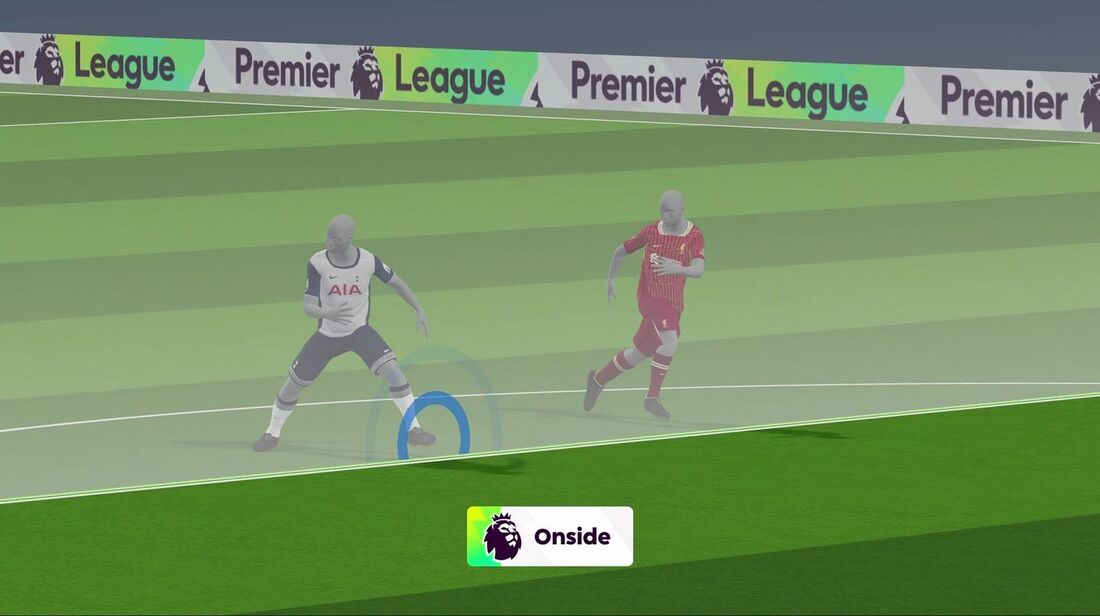
Semi-automated offside technology made its English football debut at the FA Cup fifth round on 28 February 2025, then rolled out across the Premier League from Matchweek 32 that April. Built on Genius Sports's "GeniusIQ" platform, it uses a bank of tracking cameras and AI to generate a 3D offside line for the VAR official in real time -- cutting the average decision time by roughly 30 seconds. It's "semi-automated" deliberately: a human VAR still confirms every call. Brazil's CBF is adopting the same system for 2026.
Away from officiating, AI-driven analytics is now a genuine industry with named vendors clubs actually pay for: StatsBomb, Opta/Stats Perform, SciSports, Sportlogiq and Hudl among them. Sportlogiq's pitch is notable -- computer-vision tracking pulled straight from a broadcast feed, no wearable sensors required -- and it's already extending real-time injury-risk tracking into basketball and cricket across North America and India, well beyond its football roots. Even the ball is getting instrumented: FIFA's ball for the 2026 World Cup, the "Trionda," carries a 500Hz internal sensor tracking spin, trajectory, speed and contact point on every touch.
Injury prevention is where the claims get bolder, and where it's worth reading the fine print. Zone7's injury-prediction models are now deployed at more than 50 professional football clubs, trained on a reported 200 million hours of football data; a published study of 423 injuries across 11 clubs put its accuracy at roughly 72%. That's a company-linked figure from a published study, not an independently audited one -- a useful distinction for a piece that's meant to inform rather than hype.
On the broadcast and fan side, IBM's watsonx-powered "Key Moments" and "Match Chat" launched for Wimbledon 2026 (29 June-12 July), explaining pivotal momentum swings in a match and answering fans' natural-language questions using footage and stats pulled from a 15,000-asset digital archive -- one IBM says it migrated in 47 minutes. The partnership between IBM and Wimbledon is now in its 35th-plus year.
Scouting is the area with the thinnest sourcing so far, and it's worth saying so plainly: reports describe Manchester City using AI to assess player durability and recovery, and Brighton using AI video analysis for psychological profiling, while Brazilian club Santos partnered with an app called Footbao that's credited with surfacing a previously-unscouted 18-year-old, Leonardo Veiga. All of this traces back to largely single-source wire coverage. It's a legitimate, human-interest thread -- it just shouldn't be read with the same confidence as the officiating or Wimbledon material.
None of this reads as hype dressed up as revolution. It reads like what it actually is: a sport that has spent the last two years quietly wiring AI into the parts of the game -- officiating, injury risk, fan experience -- where a wrong call, a torn hamstring, or a bored viewer all cost real money.