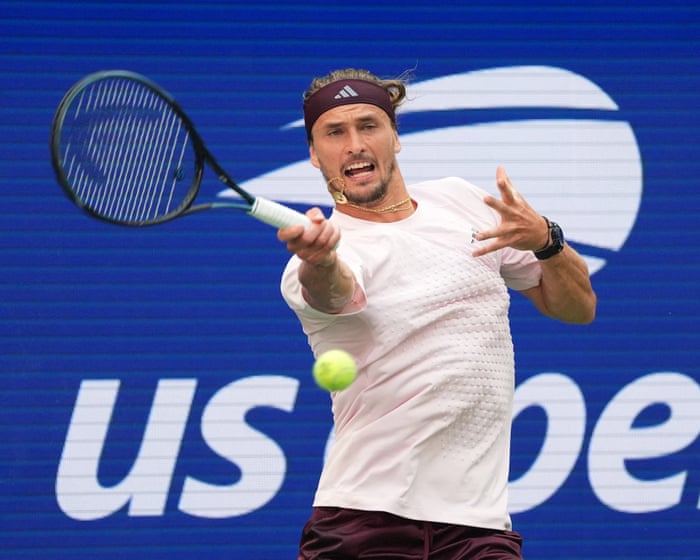
Alexander Zverev Claims US Open Crown Over Ben Shelton
Alexander Zverev defeated Ben Shelton in the US Open final to lift the title, marking a pivotal moment for both the German veteran and the rising American talent.
By Graham Pettifer · 14 Sept 2026 · 3 min read · United States edition
 via BBC Sport
Alexander Zverev's triumph at the US Open, secured by a victory over Ben Shelton in the final, offers a clear illustration of the sport's enduring cycles of experience meeting youth. The German's composure on the hard courts of Flushing Meadows contrasted sharply with Shelton's explosive shotmaking, providing a narrative that resonates beyond the immediate spectacle of the match. The win adds a notable chapter to Zverev's long-standing presence on the tour while highlighting the emergence of a new American contender.
Zverev's path to the championship has been shaped by a career defined by both lofty expectations and periods of introspection. Over the years, he has navigated the pressures of early promise, the inevitable fluctuations of form, and the physical demands of modern tennis. This latest success can be read as the culmination of a gradual refinement of his game, where his powerful groundstrokes and tactical maturity finally aligned with the demands of a Grand Slam final. The victory underscores a broader theme in the sport: the capacity for seasoned players to reinvent themselves and remain relevant amid a constantly evolving field.
For Ben Shelton, the final represented a breakthrough moment that signals the arrival of a fresh voice in American tennis. His journey to the championship match has been marked by a fearless approach, a willingness to dictate play, and an infectious confidence that has captured the imagination of fans. While the ultimate result fell short of his aspirations, his performance against a player of Zverev's stature demonstrates the increasing depth of talent emerging from the United States, a development that has been building steadily over recent seasons.
The pairing of a seasoned European and a homegrown American in a major final echoes a pattern that has recurred throughout the Open Era, where the US Open often serves as a stage for such cross-generational showdowns. This dynamic reflects a broader narrative about the tournament's role in bridging eras, offering a platform where experience can clash with youthful vigor. The result adds another layer to the ongoing dialogue about how the sport balances continuity with change, with each final contributing to an evolving tapestry of rivalry and respect.
Beyond individual storylines, the match highlighted contrasting styles that have long characterized transatlantic tennis encounters. Zverev's methodical baseline play, underpinned by a disciplined tactical framework, stood against Shelton's aggressive, high-risk approach that seeks to seize the initiative early. This stylistic tension has been a recurring theme in the sport's history, illustrating how different tennis philosophies can both complement and challenge each other on the sport's biggest stages.
Looking forward, Zverev's victory may influence the strategic calculations of his peers, reinforcing the notion that adaptability and mental resilience remain vital components of Grand Slam success. At the same time, Shelton's ascent suggests that a new generation of players is prepared to test the established order, potentially reshaping the competitive landscape in the years to come. The interplay between seasoned veterans and rising stars is likely to intensify, offering fans a compelling mix of continuity and surprise.
In sum, the US Open final between Alexander Zverev and Ben Shelton serves as a microcosm of tennis's broader evolution, where experience meets ambition, and where the sport continually redefines its own narratives. As the season moves beyond New York, both players will carry the lessons of this encounter into future battles, and observers will watch closely to see how this particular chapter informs the next phase of the game's ever-unfolding story.