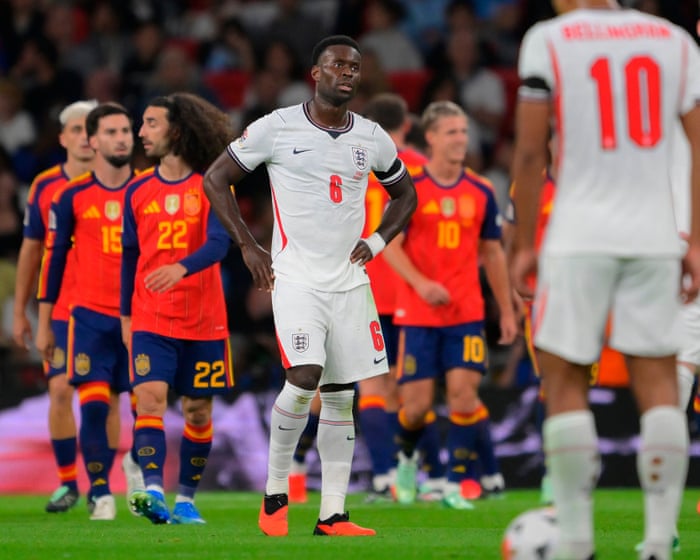
Thomas Tuchel defends handling of Alex Scott’s thigh injury amid Premier League criticism
England midfielder Alex Scott suffered a thigh injury and coach Thomas Tuchel has pushed back against Premier League authorities’ criticism of his response to the setback.
By Callum Reid · 6 Oct 2026 · 3 min read · United Kingdom edition
 Getty
GettyEngland midfielder Alex Scott’s thigh injury has ignited a sharp debate about player welfare and managerial responsibility. The setback arrived at a crucial juncture for the national side, and Thomas Tuchel, the coach overseeing the squad, found himself under fire from Premier League authorities who questioned his handling of the situation. Tuchel’s immediate response was to defend the decision‑making process that led to the injury assessment, arguing that all protocols were observed and that the player’s health remained the top priority.
The injury itself, while not detailed beyond its location, inevitably removes a key creative option from England’s midfield options. In a campaign where depth and versatility are prized, the loss forces a reshuffle of the tactical blueprint. The coach now faces the task of integrating a replacement without compromising the team’s balance, a challenge that will test the adaptability of the entire group. The timing also means that any lingering doubts about squad cohesion could be amplified as the calendar tightens.
Tuchel’s defence has centered on the procedural rigor applied from the moment the thigh strain was identified. He emphasized that the medical team acted swiftly, that the player was monitored closely, and that any decision to rest the midfielder was taken in line with established guidelines. The Premier League authorities, however, have voiced concerns that the process may have been rushed or that external pressures influenced the outcome. This clash of narratives highlights an underlying tension between national team management and the league’s oversight bodies, each keen to protect its own interests.
The broader conversation touches on a perennial issue in modern football: the balance between competitive urgency and player health. When a high‑profile injury occurs, the spotlight inevitably turns to whether clubs, national teams, or governing bodies are doing enough to mitigate risk. In this instance, the criticism from the league suggests a belief that the national side may have overstepped, perhaps by prioritising immediate availability over a longer‑term recovery plan. Tuchel’s rebuttal serves as a reminder that the stakes are high for all parties when a player’s condition is at the centre of the debate.
Looking ahead, England must prepare for the next fixtures without the injured midfielder, while also managing the narrative surrounding the incident. Squad depth will be tested, and the coaching staff will need to demonstrate that they can maintain performance levels despite the personnel change. The episode may also prompt a review of communication protocols between national teams and league authorities, ensuring that future injuries are handled with a transparent, mutually agreed‑upon approach.
In the final analysis, the incident underscores how quickly a medical issue can evolve into a political flashpoint. Tuchel’s staunch defence of his actions reflects a broader desire among managers to retain autonomy over squad decisions, even when external bodies push for scrutiny. The Premier League’s criticism, meanwhile, signals a willingness to intervene when they perceive standards slipping. How both sides navigate this friction will shape not only the immediate recovery of Alex Scott but also the longer‑term relationship between England’s national team and the league’s governing framework.