The Huddle and the Long Run: How Team and Solo Sports Build Bonds
The psychology of a locker room and the psychology of a marathon start line aren't the same question, and the research on one is much further along than the research on the other.
By Miles Ashworth · 27 Aug 2026 · 2 min read · United Kingdom edition
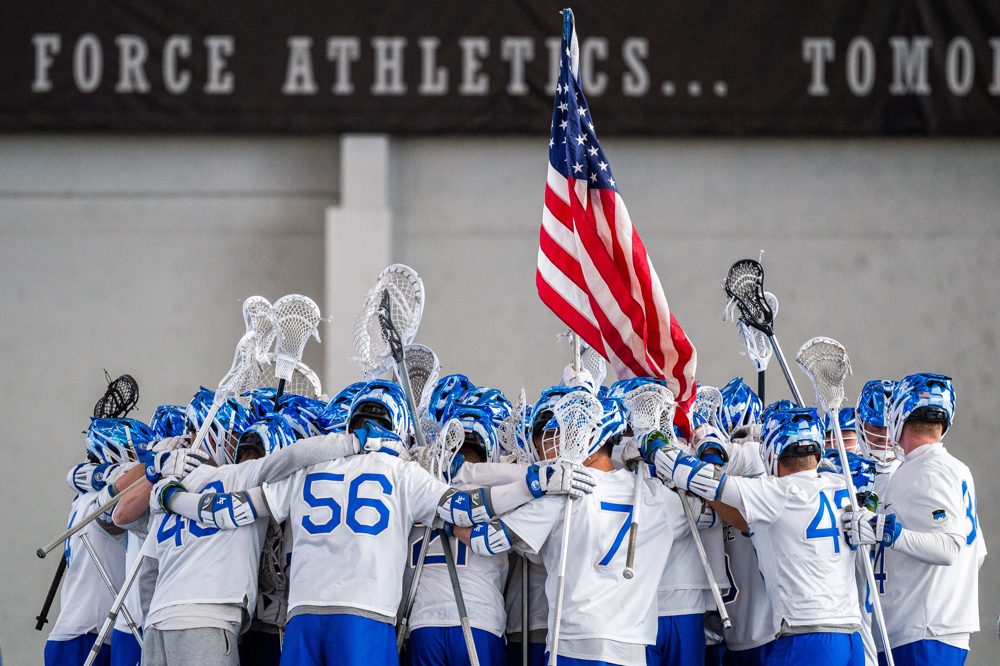 Trevor Cokley / U.S. Air Force (public domain)
In 2002, sports psychologist Albert Carron set out to compare how strongly a sense of togetherness actually predicts performance across different kinds of groups -- work teams, military units, and sports teams among them. Sports teams came out on top: the cohesion-performance link was stronger there than in any other group type he studied. It's one of the more genuinely well-established findings in the psychology of team sport, and it's a large part of why coaches spend as much time managing a locker room as they do drawing up a game plan.
Carron's framework splits that togetherness into two distinct parts. Task cohesion is a team's shared commitment to a common goal -- everyone working toward the same result. Social cohesion is the relationships underneath that: whether teammates actually like each other, spend time together, trust one another off the pitch as well as on it. A team can have plenty of one without much of the other, and researchers treat them as separate things to measure, not two words for the same idea. A related concept, collective efficacy, captures something else again: a team's shared belief that it can get the job done, which isn't just each player's individual confidence added together -- it's treated as a property of the group itself.
Solo sports don't have a locker room to build any of that in, which raises the obvious question: what replaces it? The honest answer is that the research here is thinner. What is well documented is the centrality of the coach-athlete relationship, described as the basis for an effective performance setting for an individual competitor in a way that's structurally similar to what a team gets from its teammates. A tennis player, a boxer, a marathon runner: the coach becomes a primary source of the trust, feedback and shared belief that a team gets from twenty-odd teammates instead.
The idea that solo sport carries its own particular psychological weight isn't a new observation -- Alan Sillitoe gave it a title in 1959 that has outlasted the story itself: "The Loneliness of the Long-Distance Runner." Six decades on, it's still the phrase reached for whenever someone wants to describe what it feels like to be the only person responsible for the outcome, with no one to share the load when it goes wrong.
None of this means solo athletes are worse supported, just differently supported -- and less studied. Team cohesion has a real, citable research base built up over decades; the equivalent map for individual sport is still being drawn, one coach-athlete relationship at a time.