London Marathon 2026
Sabastian Sawe ran the first sub-two-hour marathon in history, Tigst Assefa set a women's-only world record, and 59,830 runners finished, a new world record. Inside the race, the course, and what it takes to run the 2027 edition.
By Miles Ashworth · 27 Apr 2026 · 3 min read · United States edition
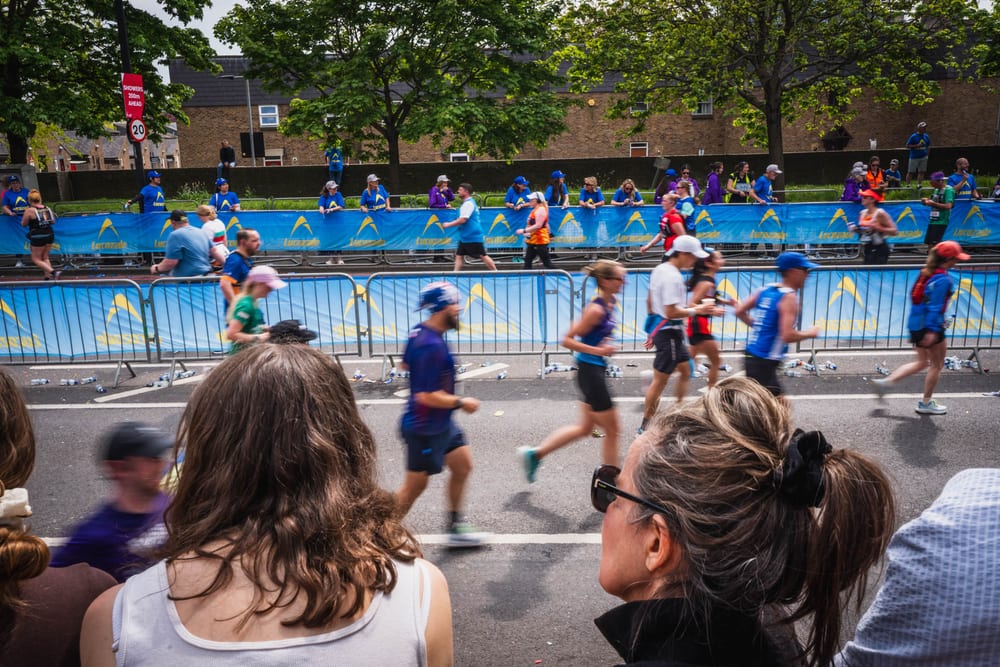 Runners and spectators along the 2026 London Marathon course. Photo: Paul Hudson, via Wikimedia Commons (CC BY 2.0).
The London Marathon has produced plenty of historic days, but April 26, 2026 will be remembered as one of the most extraordinary in the sport's history. Sabastian Sawe of Kenya won the men's race in 1:59:30, the first sub-two-hour marathon ever run in open competition. Runner-up Yomif Kejelcha crossed in 1:59:41, the fastest time ever recorded by a non-winner, and the fastest marathon debut on record. Jacob Kiplimo completed a remarkable podium in third, 2:00:28.
The women's race was every bit as historic. Tigst Assefa of Ethiopia won in 2:15:41, a women's-only world record, and for the first time ever, three women broke 2:16 in the same race. Both the men's and women's world records from this exact London Marathon have already been covered in full on Sports Unions as their own dedicated pieces, this one is about the event itself: a race that will likely be remembered as the day the marathon's oldest psychological barrier finally fell.
The Course
London's course starts from three separate points, Greenwich Park (red), St John's Park (green), and Shooter's Hill (blue), all converging near Woolwich before the race properly begins. From there it runs through Charlton and Greenwich, past the Cutty Sark and the Old Royal Naval College, through Deptford, Surrey Quays, Rotherhithe and Bermondsey to Tower Bridge at the halfway point, then east through Wapping, Limehouse and the Isle of Dogs to Canary Wharf, before turning back through Poplar, Tower Hill and Embankment, past the London Eye, along Birdcage Walk, and finishing on The Mall.
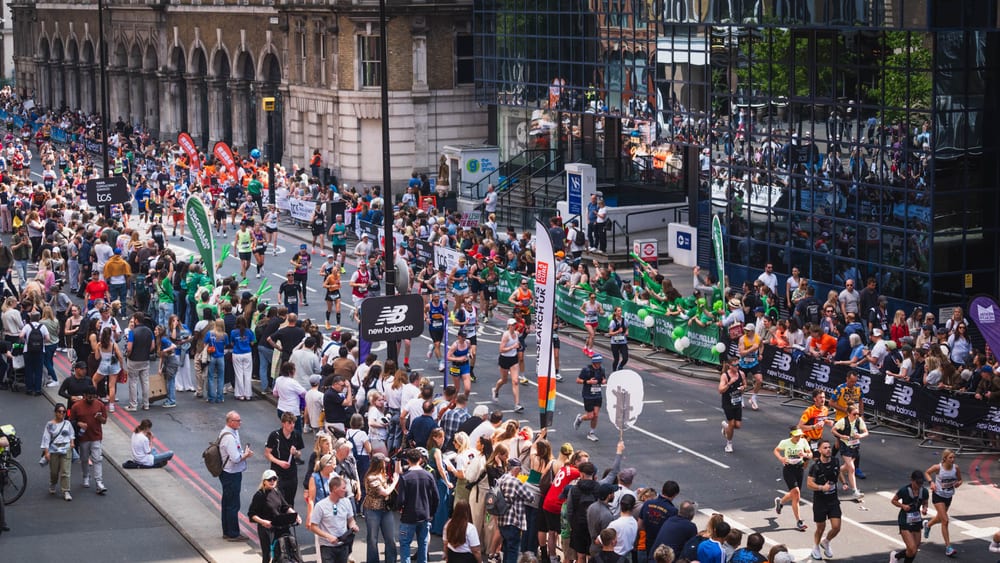 The London Marathon passing through the City of London. Photo: Paul Hudson, via Wikimedia Commons (CC BY 2.0).
With only 85 metres of elevation gain across the full 26.2 miles, it's widely regarded as one of the fastest marathon courses in the world, which is exactly why it keeps producing days like this one. The 2026 race also set a Guinness World Record for the most marathon finishers ever at a single event, 59,830, in front of roughly 800,000 spectators lining the route, and drew a record 1,133,813 ballot applications for future entry.
Entering the 2027 Edition
Now branded the Double TCS London Marathon, the 2027 edition's public ballot has already closed, results were sent out in early July with a confirmation deadline of July 31, both already passed. Charity places are the only route left for most runners hoping to take part. Entry costs range from £49.99 for the ballot's double-chances option up to £275 for international entries, which includes a carbon offset contribution.
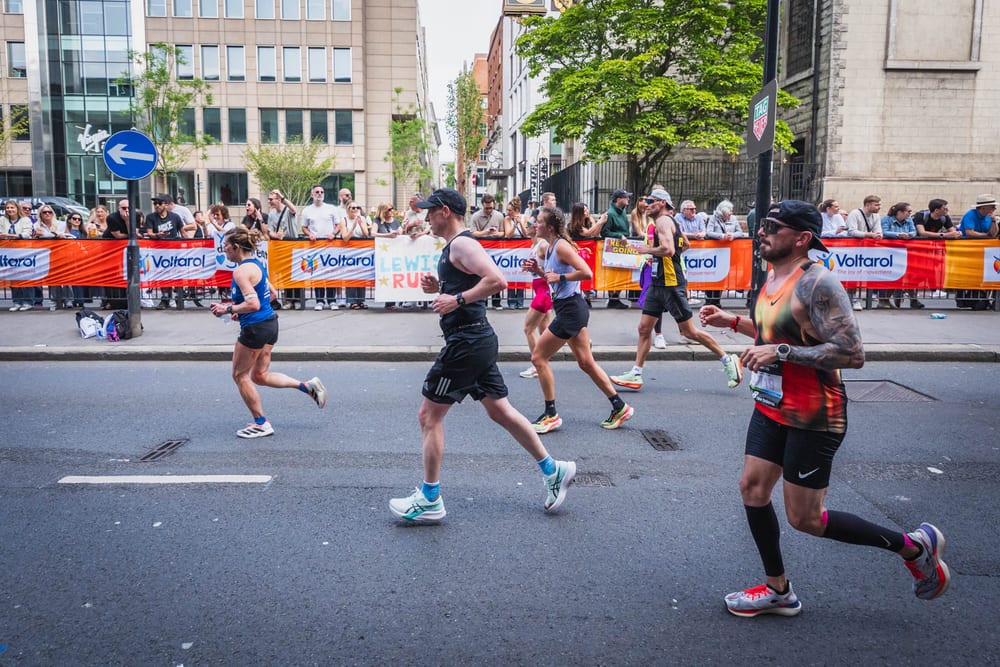 Runners along the London Marathon route. Photo: Paul Hudson, via Wikimedia Commons (CC BY 2.0).
Good-for-age and championship entry routes also exist for runners who meet the qualifying standard, though exact time thresholds for the 2027 race hadn't been published at the time of writing. For everyone else, the next real opportunity is the 2028 ballot, which won't open until after this edition has been run.