Zidane’s Paris Preview Ahead of France‑Italy Nations League Clash
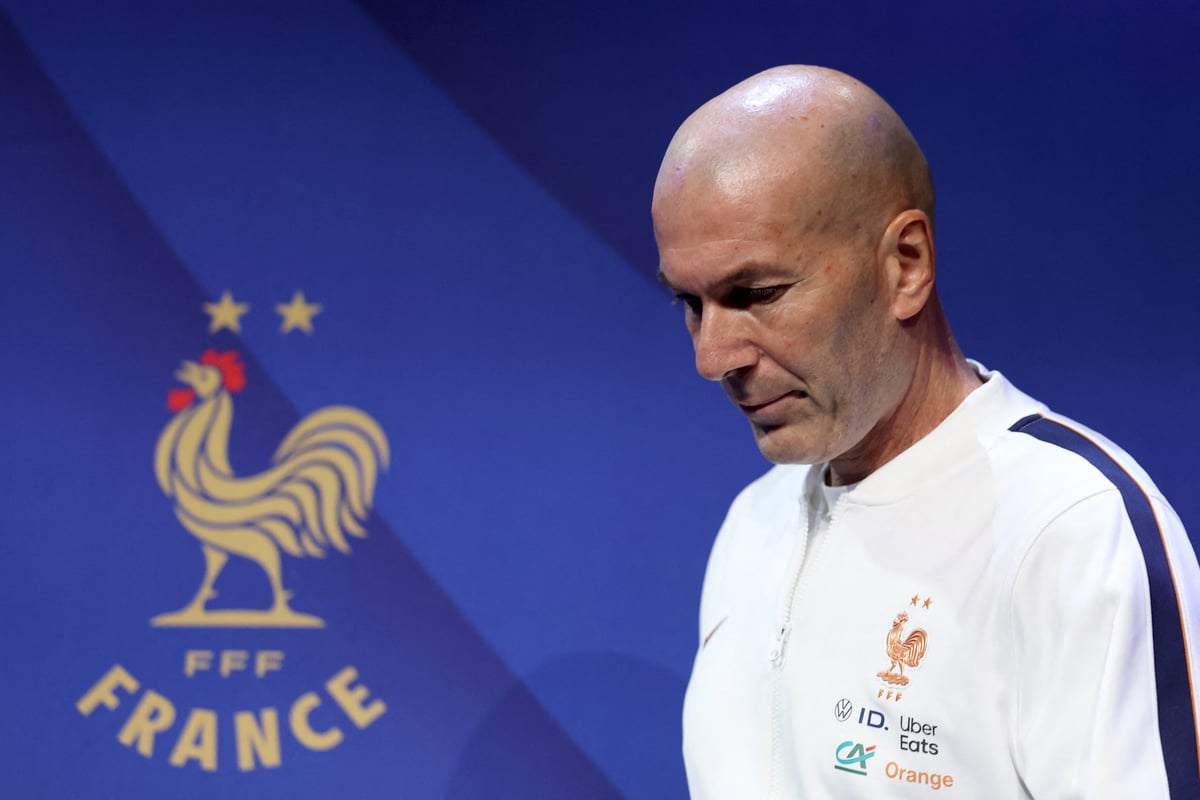
France faced Italy in a Nations League match as Zinedine Zidane readied himself to take charge of Les Bleus in Paris, a moment that intertwines rivalry with a coaching transition.
By Naomi Osei · 3 Oct 2026 · 3 min read · United Kingdom edition
 AFP/Getty
The encounter between France and Italy in the Nations League arrived with an added layer of intrigue: Zinedine Zidane, the iconic former midfield maestro, was set to assume the reins of Les Bleus in Paris. The match itself, a classic fixture between two of Europe’s most successful footballing nations, served as a litmus test for both squads and a symbolic hand‑over for the French side.
Historically, the France‑Italy rivalry has produced some of the continent’s most memorable moments, from the 2000 European Championship final to the 2006 World Cup semi‑final. That legacy shapes expectations every time the teams meet, and the Nations League provides a contemporary stage where the weight of history meets the immediacy of current form. For France, the match offered a chance to reaffirm its status after a period of transition, while Italy sought to demonstrate resilience following recent setbacks.
In the broader context of the Nations League, the result carries implications beyond the three points at stake. Both teams are vying for a favorable position in the league’s tiered structure, which influences future seedings for major tournaments and determines the level of competition in subsequent cycles. A win for either side would not only boost morale but also tighten their grip on the top spot in the group, making the margin for error increasingly narrow.
From a tactical perspective, the encounter forced both managers to weigh tradition against adaptation. France’s recent tactical identity has blended fluid attacking movement with disciplined defensive transitions, a framework that Zidane is expected to refine. Italy, known for its organized defensive blocks and swift counter‑attacks, likely aimed to test the flexibility of the French setup. The absence of hard numbers in the public domain means the analysis rests on observable patterns: possession exchanges, the timing of forward runs, and the strategic positioning of full‑backs.
Player narratives added further texture to the fixture. France fielded a blend of seasoned campaigners and emerging talents, a mix that reflects the long‑term planning inherent in a coaching change. The presence of young forwards hungry for international recognition contrasted with the experience of midfield anchors who have navigated high‑pressure environments. Italy, meanwhile, leaned on a core of veterans who have become the backbone of the Azzurri’s recent campaigns, while also integrating promising prospects eager to stake a claim on the world stage.
The outcome of the match will reverberate through upcoming competitions. A French victory would provide Zidane with immediate credibility ahead of his Paris debut, smoothing the transition from player legend to managerial authority. Conversely, an Italian triumph could shift momentum, compelling the French hierarchy to reassess tactical nuances before the next major tournament. In either scenario, the Nations League result will inform squad selections, strategic emphasis, and psychological preparation for the qualifiers that follow.
Looking ahead, Zidane’s impending stewardship of Les Bleus represents more than a coaching appointment; it signals a strategic pivot that blends the nation’s storied past with a forward‑looking vision. The France‑Italy encounter, while a single data point in a larger competition, offers a microcosm of the challenges and opportunities that await. As the teams depart the field, the real story will be how that result shapes the narrative of French football in the months leading up to the next continental showdown, with Paris poised to become the new arena for Zidane’s managerial debut.