Kai Havertz injury casts doubt over Germany’s Euro hopes after Netherlands clash
Germany’s Kai Havertz left the match against the Netherlands with an injury, raising concerns for the national team ahead of upcoming tournaments.
By Naomi Osei · 25 Sept 2026 · 2 min read · United Kingdom edition
 Getty
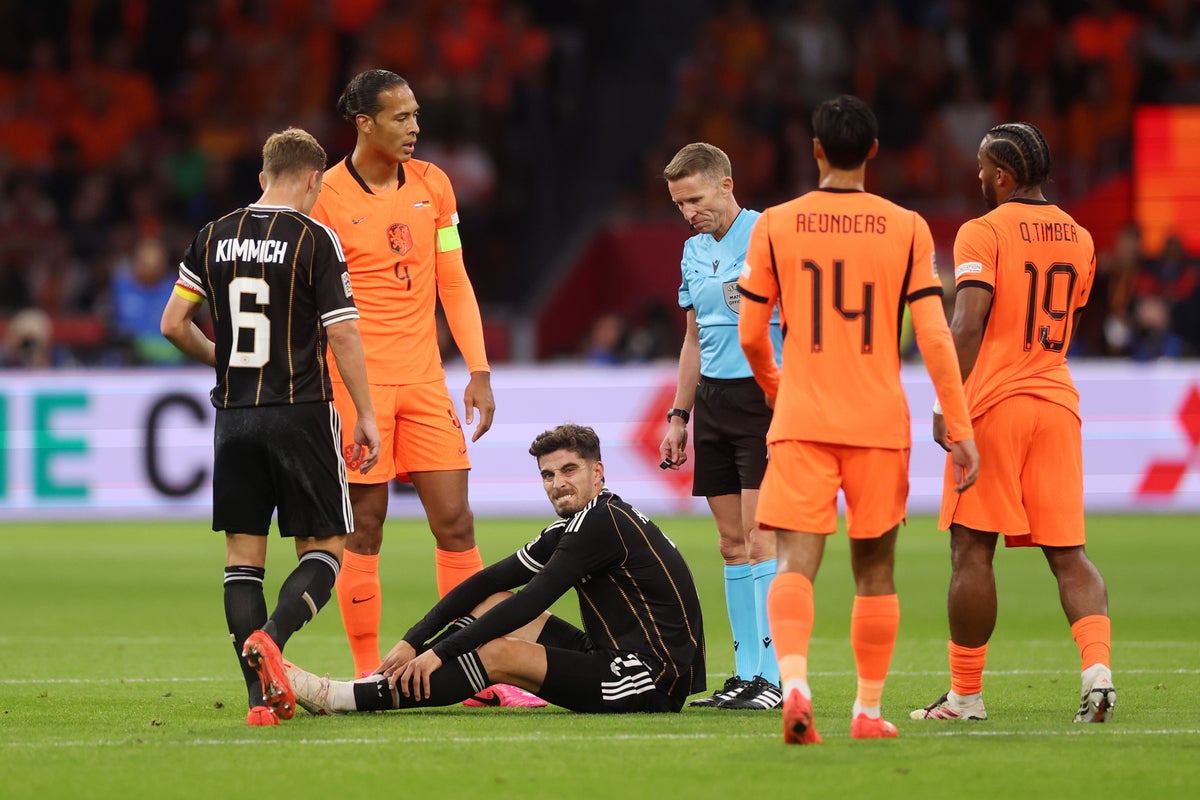
GettyGermany’s midfield lost a key component in the second half of their recent encounter with the Netherlands when Kai Havertz was forced off with an injury. The German side, already navigating a tightly contested fixture, saw their tactical flexibility shrink as the versatile attacker, who often bridges midfield and attack, limped off the pitch. The incident came at a juncture when both teams were probing for a breakthrough, and the loss of Havertz altered the dynamic for the remainder of the game.
Havertz’s injury is significant not merely because of his on‑field contributions but also because of the roles he fills for the national squad. He offers a blend of technical skill, vision and the ability to occupy multiple positions, a rarity at the highest level. Coaches value that adaptability when shaping line‑ups against varied opposition, and his absence forces a reconsideration of who can replicate that hybrid function without compromising balance.
From a broader perspective, the timing of the setback cannot be ignored. The match against the Netherlands was a preparatory test ahead of the upcoming European Championship qualifiers, and the German camp had been using such fixtures to fine‑tune combinations. Losing a player of Havertz’s stature at this stage means the coaching staff will have to accelerate the integration of alternatives, potentially reshuffling established partnerships that have been nurtured over months.
The injury also has a psychological dimension. Players often draw confidence from seeing a teammate battle through adversity, and an abrupt exit can unsettle squad morale. Germany’s dressing room will now have to manage any lingering concerns about fitness and readiness, especially as the calendar tightens and there is little room for prolonged recovery periods.
In practical terms, the medical assessment will dictate the short‑term outlook. If the injury is minor, Havertz could be available for the next friendly, but a more serious issue would see him miss at least one qualifier. The national team’s depth has improved in recent years, yet the specific skill set Havertz provides is not easily replicated, meaning the tactical options for the upcoming matches could be narrowed.
The incident also offers a reminder of how fine the margins are in international football. One moment of contact can reshape a squad’s trajectory, and the Netherlands will likely note that their defensive pressure yielded a tangible result. For Germany, the focus now shifts to managing the player’s rehabilitation while ensuring that the rest of the unit remains cohesive and competitive.
Looking ahead, the real test will be how quickly Germany can adapt. If Havertz returns fit, the squad will regain a crucial piece of its puzzle; if not, the coaching staff will need to trust in the emerging talent pool to fill the void. Either way, the injury underscores the fragile nature of tournament preparation, where a single setback can ripple through strategy, selection and confidence alike.