Dakar Rally 2027 Preview
Dakar opens the 2027 motorsport calendar in Saudi Arabia for an 8th straight year, though exact dates aren't out yet. Every category explained, a full year-by-year record of all seven Saudi-era editions, and the field to watch once entries firm up.
By Miles Ashworth · 3 Sept 2026 · 8 min read · United Kingdom edition
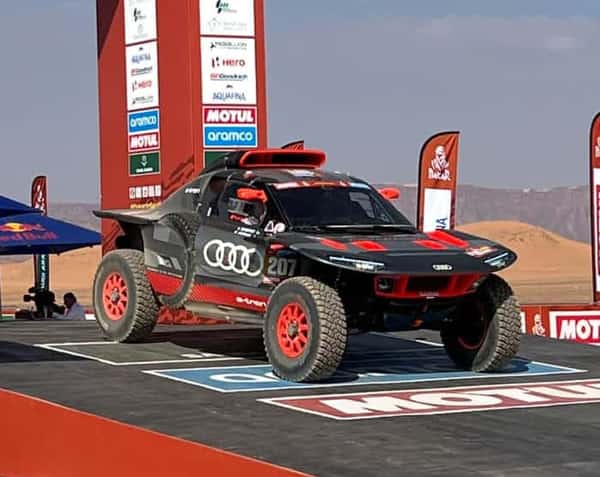 An Audi RS Q e-tron hybrid prototype at the start ramp of the 2024 Dakar Rally in Saudi Arabia. This photo is from 2024, not the 2027 edition. Source not independently confirmed beyond the Commons upload; flagged for review before any live use.
The Dakar Rally opens the 2027 motorsport calendar in Saudi Arabia, the race's host country since 2020 and now the site of its 8th consecutive edition there. Dakar hadn't announced an exact 2027 route, dates, or entry list at the time of writing. The race has settled into a January slot every year since the move to Saudi Arabia, so a similar window is likely, but nothing is confirmed. This preview covers the format and a full year-by-year base of every Saudi-era edition so far; it'll be updated once Dakar publishes real 2027 details.
What the Race Actually Is
Dakar is a rally raid: an off-road endurance event where competitors navigate largely unmarked desert terrain by roadbook rather than following a set track, racing against the clock across stages that can run anywhere from a few dozen kilometres to 800-900 in a single day. It's genuinely dangerous by design. Founder Thierry Sabine died in a helicopter crash covering the race in 1986, and the truck category was suspended for a year in 1989 after a fatal accident involving vehicles that had grown too powerful for the terrain; two motorcyclists were killed during the 2020 Saudi Arabia edition alone.
The race began in 1979 running Paris to Dakar, Senegal across the Sahara, moved to South America for a decade after security concerns in Mauritania forced the cancellation of the planned 2008 route, and has been based in Saudi Arabia since 2020 following a breakdown in relations with South American hosts.
The Categories, Explained
Motorcycles are capped at 450cc, split into the competitive RallyGP and Rally2 groups, plus an "Original by Motul" class for riders competing self-supported with minimal outside assistance. It's traditionally the most closely watched category: KTM won every motorcycle title from 2001 to 2019, an 18-year run that still shapes how the field is read today.
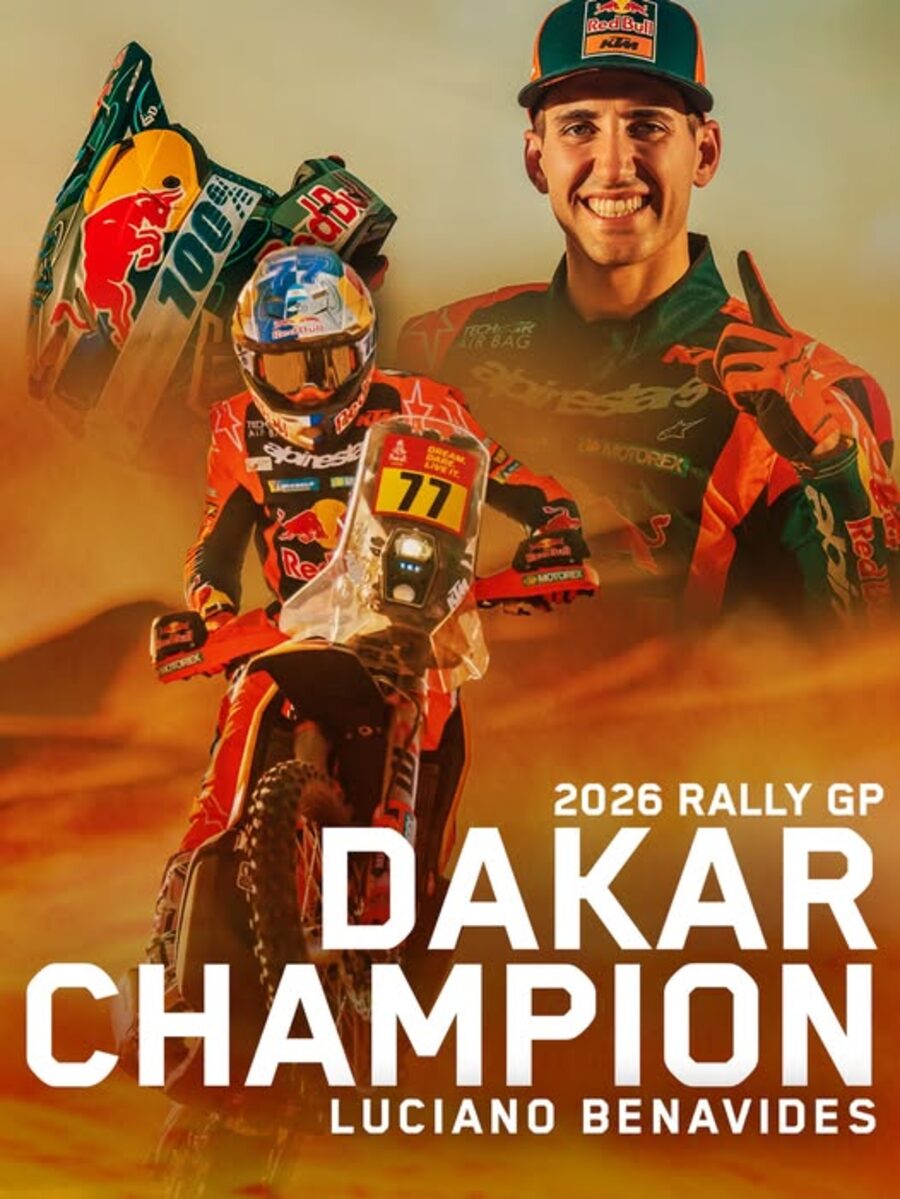 Luciano Benavides, 2026 Dakar Rally motorcycle (Rally GP) champion, Red Bull KTM. Promotional team/Red Bull graphic supplied by the user; not a Wikimedia Commons CC image, original source and copyright not independently confirmed, flagged for review before any live use.
Cars race in two classes: T1, "Improved Cross-Country Vehicles" built specifically for the discipline, and T2, closer-to-production "Cross-Country Series Production Vehicles." Both are capped at 3,500 kg and can run 2WD or 4WD. This is the category that produces the overall race's most recognisable winners, Carlos Sainz, Nasser Al-Attiyah, Stéphane Peterhansel among them.
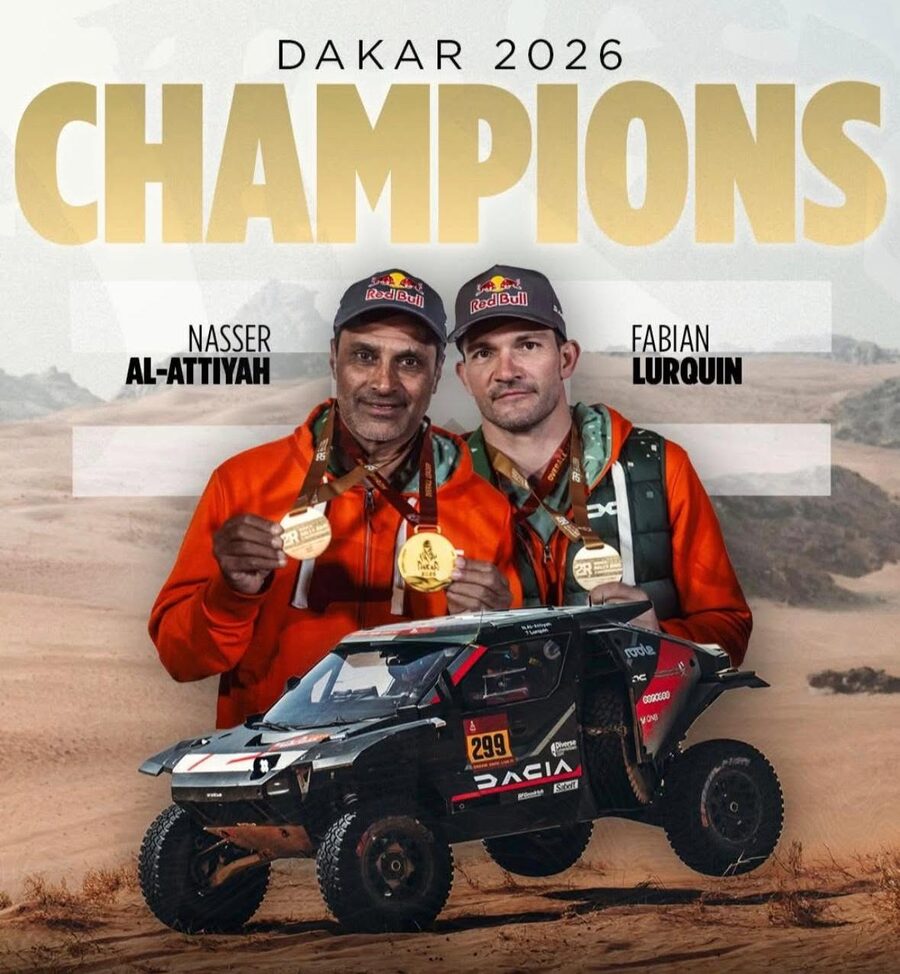 Nasser Al-Attiyah and co-driver Fabian Lurquin, 2026 Dakar Rally car champions, Dacia Sandriders. Promotional graphic supplied by the user; not a Wikimedia Commons CC image, original source and copyright not independently confirmed, flagged for review before any live use.
Trucks (T4, minimum 3,500 kg) split into series-production, modified, and rally-support subclasses. Russia's Kamaz-Master won the category repeatedly in the early Saudi era, but hasn't competed at Dakar since 2022: organisers imposed a ban on Russian and Belarusian competitors that year following the invasion of Ukraine, and Kamaz has been unable to meet the compliance requirements needed to return since. (They've continued racing elsewhere, including a 2026 return at the Taklimakan Rally in China, just not at Dakar.) Iveco-powered trucks have won every truck category since, split between the Netherlands' Team De Rooy (2023 and 2026) and Czech driver Martin Macík's MM Technology squad (2024 and 2025).
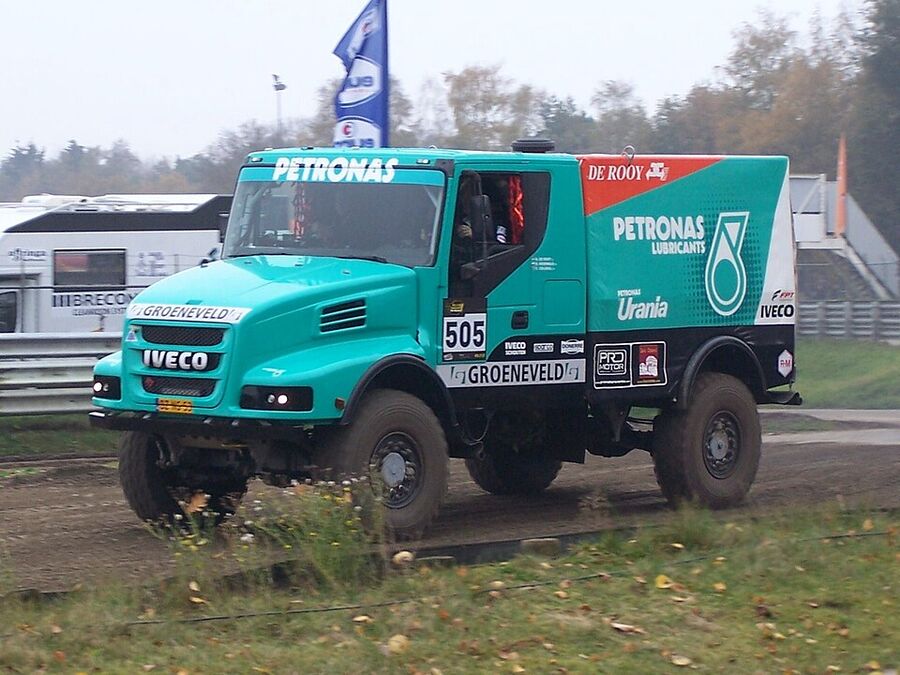 An Iveco Powerstar rally truck, Team De Rooy, in Petronas livery. Team De Rooy and Iveco won the 2026 Dakar Rally truck category with driver Vaidotas Žala, but this specific photo is from 2011, a different sponsor livery and truck generation than the 2026 entry. Photo: Patsim, via Wikimedia Commons (CC BY-SA 3.0).
Lightweight prototypes and SSVs (T3 "Challenger" buggies and T4 side-by-sides, formerly grouped together, split into separate classes in 2021) are smaller, nimbler off-road vehicles, closer in spirit to dune buggies than to full rally cars.
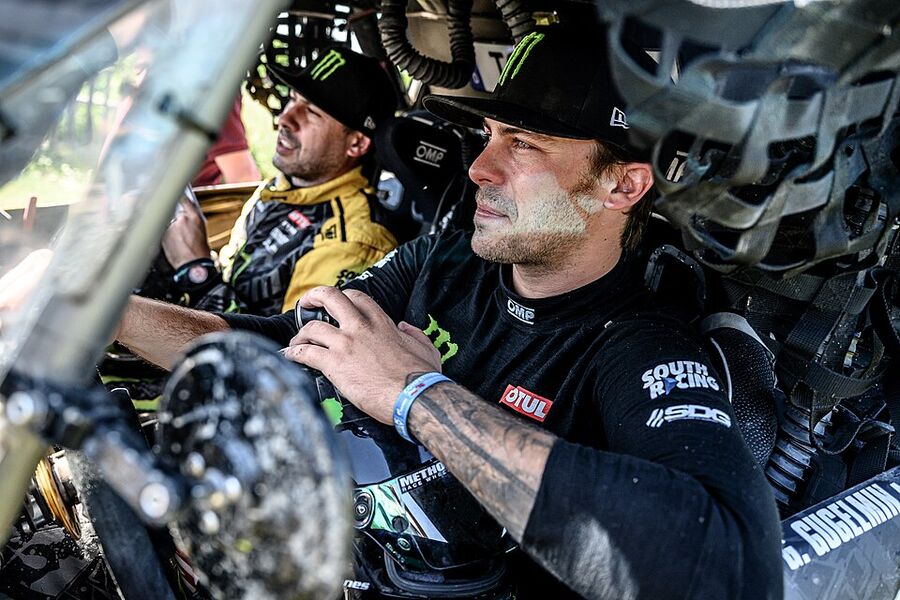 Austin Jones (driving) and Gustavo Gugelmin, South Racing, in the cockpit of their T3-class prototype buggy. This photo is dated July 2021 and isn't confirmed to be from a Dakar stage specifically, but it's the same driver pairing that went on to win the Dakar Light Prototype/T3 category together in 2023. Photo via Wikimedia Commons (CC BY-SA 4.0).
Quads were once a full Dakar category but were discontinued after the 2024 edition as manufacturer support declined; the 2025 and 2026 entry lists carried no quad entries at all.
Two smaller categories round out the field. Classics are for vehicles built before 2000 (or built to 2005-spec replica rules as of 2025), scored on regularity rather than raw speed, with their own dedicated route and reduced entry fees. Mission 1000, introduced in 2024 under Dakar's "Dakar Future" program, is for alternative-powertrain vehicles, electric, hydrogen and hybrid, racing roughly 100 km stages for a points-based score rather than a straight time comparison. The Audi RS Q e-tron pictured above isn't actually part of Mission 1000: it's a hybrid prototype that raced in the main car category itself (a dedicated alternative-energy sub-class, T1-E in 2022 and T1.U in 2023-2024), and first competed in 2022, two years before Mission 1000 existed.
Every Saudi Arabia Edition So Far
2020 (Jan 5-17): Jeddah to Al-Qiddiya, 12 stages, roughly 7,900 km total including 5,000 km of timed special stages. 351 vehicles entered, 226 finished, split across bikes (147), cars (89), trucks (47), UTVs (45) and quads (23). Terrain: sand, rocks, dirt and tarmac across the Red Sea coast, the Empty Quarter's dunes, and the Eastern Province. Two motorcyclists were killed during the event. Winners: Carlos Sainz (cars, Mini), Ricky Brabec (bikes, Honda), Andrey Karginov (trucks, Kamaz), Casey Currie (UTVs, Can-Am), Ignacio Casale (quads).
2021 (Jan 3-15): Both start and finish in Jeddah, a prologue plus 12 stages, one rest day in Ha'il. 322 entered, 310 started, 206 finished: bikes (101 started, 63 finished), cars (64/48), UTVs (61/41), trucks (44/20), quads (16/11), Classics (24/23). Winners: Stéphane Peterhansel (cars, Mini), Kevin Benavides (bikes, Honda), Dmitry Sotnikov (trucks, Kamaz), Francisco López Contardo (UTVs, Can-Am), Manuel Andújar (quads).
2022 (Jan 1-14): Ha'il to Jeddah, a prologue plus 12 stages, rest day in Riyadh. Around 4,000 km of special stages plus 2,500-3,000 km of liaison driving, 750 competitors across 430 vehicle entries. Terrain included canyons and cliffs alongside the usual dunes and Red Sea coastline. Heavy rain hit the opening stages hard enough that organisers scrapped the planned marathon stages 2 and 3. Winners: Nasser Al-Attiyah (cars, Toyota), Sam Sunderland (bikes, Gas Gas), Dmitry Sotnikov (trucks, Kamaz), Austin Jones (UTVs, Can-Am), Alexandre Giroud (quads, Yamaha).
2023 (Dec 31, 2022-Jan 15, 2023): Started near Yanbu on the Red Sea, finished at Dammam on the Persian Gulf, coast to coast, 14 stages plus prologue, 5,000 km of special stages, 70% of it new terrain not used in prior editions. 383 entries, 233 finishers, across bikes (142), cars (74), trucks (55), the newly-split SSV/T4 (48) and Challenger/T3 (45) classes, and quads (19). Winners: Nasser Al-Attiyah (cars, Toyota), Kevin Benavides (bikes, KTM), Janus van Kasteren (trucks, Iveco/De Rooy), Eryk Goczał (SSVs), Alexandre Giroud (quads).
2024 (Jan 5-19): Al-'Ula to Yanbu, a prologue plus 12 stages, including a 48-hour "chrono stage" covering over 600 km with a midnight halt built in. 5,000 km of special stages. 345 entries (340 at the start, 232 finishers): bikes (136), cars (73), trucks (47), Challenger/T3 (43), SSV/T4 (36), quads (10, its last year as a category), plus 80 Classics entries. Winners: Carlos Sainz (cars, Audi RS Q e-tron), Ricky Brabec (bikes, Honda), Martin Macík (trucks, Iveco), Cristina Gutiérrez (Challenger/T3), Xavier de Soultrait (SSV/T4).
2025 (Jan 3-17): Bisha to Shubaytah, 12 stages over 14 racing days, including a 48-hour chrono marathon stage covering 950 km. 353 entries, 335 starters, 224 finishers: bikes (136 entered, 89 finished), cars (67/50), Challenger/T3 (54/36), SSV/T4 (51/31), trucks (45/18), plus 95 combined Classic car and truck entries. Route crossed the Empty Quarter. Winners: Yazeed Al-Rajhi (cars, Toyota), Daniel Sanders (bikes, KTM), Martin Macík (trucks), Brock Heger (SSV/T4, Can-Am), Nicolás Cavigliasso (Challenger/T3).
2026 (Jan 3-17): Both start and finish in Yanbu, 13 stages plus prologue, one rest day, 15 days total. 321 registered, 317 started, 242 finished: bikes (116), cars (73), trucks (46), SSV/T4 (41), Challenger/T3 (37), a new Stock class (8), plus 97 Classic entries. Winners: Nasser Al-Attiyah (cars, Dacia Sandriders), Luciano Benavides (bikes, KTM), Vaidotas Žala (trucks, Iveco/De Rooy), Brock Heger (SSV/T4), Rokas Baciuška (Stock, Defender), Pau Navarro (Challenger/T3).
Across the terrain and weather notes available: every Saudi edition has run over broadly the same mix of sand, rock, gravel and tarmac, threading the Empty Quarter's dunes, canyon country and both the Red Sea and Persian Gulf coastlines. 2022 is the one edition with a documented weather disruption, heavy rain that forced organisers to cut stages; no other edition in this list has a weather event on record.
The Field to Watch
Nasser Al-Attiyah has won the car category six times overall and is the most successful active driver in the Saudi era. Whether he returns to defend in 2027, or a fresh face breaks through the way Yazeed Al-Rajhi did in 2025, is one of the open questions once entry lists firm up. In bikes, KTM's near-two-decade stranglehold on the category (2001-2019 unbroken, and still a major force since through riders like Kevin Benavides, Daniel Sanders and Luciano Benavides) remains the backdrop every new motorcycle season gets read against.
This article will be updated as Dakar confirms 2027 dates, route, and entry details.