The Week Before My First Jiu-Jitsu Win: A Lesson from the Mat
After three tournaments without a win, Rafael Vinicius faced a heavier purple belt with a minute and a half left and a points deficit. A technique taught in an ordinary morning class the week before changed the result.
 By Rafael Vinicius · 24 Nov 2026 · 5 min read
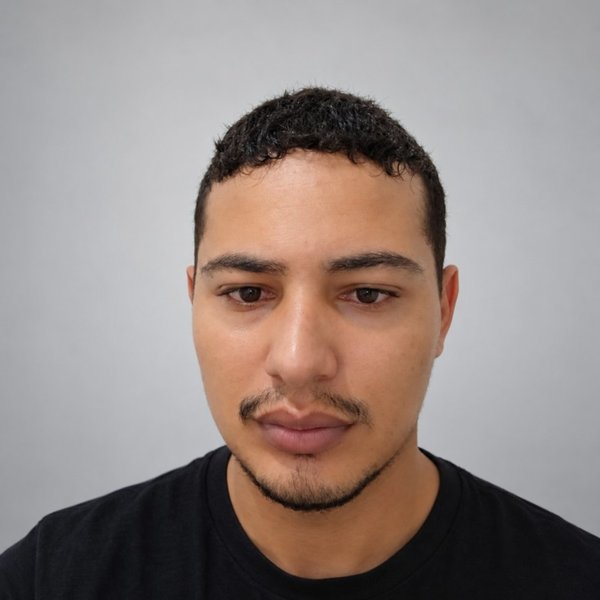
Photo: Rafael Vinicius“Já tinha competido outras vezes, mas eu nunca tinha chegado a ganhar.” (I had competed before, but I had never won.)
By the time of this tournament I had entered about three competitions as a blue belt in Brazilian jiu-jitsu. One of them was a bigger event in Belo Horizonte. Each time I lost, sometimes on points, sometimes by submission. If you have trained in a combat sport you know that feeling: all the hours in the gym, and nothing on the scoreboard to show for them.
This is the story of the day that changed, and of an ordinary class a week earlier that made it possible.
A normal morning class
I usually trained at night, but sometimes I went to the morning sessions, where more of the advanced students trained. In the week before the tournament, at one of those morning classes, our instructor Ricardo, a brown belt at the time, taught the whole team how to escape from the turtle: the position where you are on your knees and elbows with your opponent on top of you.
It was not a private lesson or a competition plan. It was one technique in one class. I drilled it with everyone else and went home. Today I cannot honestly tell you the exact grips or which way I turned. What I can tell you is that a week later, my body remembered it.
No opponent in my division
The tournament was the Copa Vale do Aço de Jiu-Jitsu, held in 2015 at the Colégio João Calvino gymnasium in Coronel Fabriciano, Minas Gerais. I cannot remember the exact date, so I will not pretend to.
I weighed around 93 kg. When I arrived, there was nobody in my belt and weight category. The same was true for a purple belt from another team, who was a little heavier than me. Neither of us wanted to go home without competing, so we agreed to fight each other: a blue belt against a purple belt, a grade above me.
I was apprehensive about saying yes, and I stayed nervous right up to the moment I stepped onto the mat.
“Pau a pau”
“A luta foi pau a pau.” In Portuguese, a fight that is pau a pau is one where neither side gives an inch. That is exactly what this six-minute match was.
Ricardo could not be there that day because he was working. Our head instructor, Mestre Garcia, was at the tournament supporting the other students from our team. Watching my match was Hudson, a jiu-jitsu purple belt and judo teacher.
For most of the fight I was behind on points. I have never seen the official scoresheet, so I will not give numbers. What I remember clearly is the position I ended up in: on my knees, turtled up, with a heavier, more experienced opponent on top of me.
“O bom é que eu tinha treinado sair dessa posição na semana antes do campeonato com o professor Ricardo.” (The good thing was that I had trained getting out of that position the week before the tournament, with Ricardo.)
The lesson comes back
I used what Ricardo had shown us. I got out of the turtle, came around to his back and put both hooks in. Looking back, I think I turned the match around in roughly the last minute and a half, maybe less.
From his back, I went for a rear-naked choke. It did not finish. While I was working for it, he trapped one of my feet with his legs and raised his hips, stretching my foot and ankle. My feet were not crossed. It may have been a straight ankle lock; I cannot say for certain. What I can say is that it hurt enough that I thought about tapping.
I knew there was very little time left, and Hudson was shouting to me to hold on, that there were only seconds to go. So I held on. Neither of us got the submission, and the match went the full six minutes.
The result
When the time ran out, I was declared the winner. My first win, after three tournaments of walking off the mat without one.
“Aí tanto ele como eu acabou comemorando, porque foi uma boa luta tanto pra mim como pra ele.” (Then both of us ended up celebrating, because it had been a good fight for him as much as for me.)
There is a respect in jiu-jitsu between two people who have just tested each other like that. In our case it lasted: my opponent and I became friends after that match.
A word from Mestre Garcia
Mestre Garcia congratulated me at the tournament. Then, at training the following Monday, he called everyone who had competed to the front and congratulated each of us, winners and losers alike.
That stayed with me. My win was the reason for my own celebration, but in front of the team it counted the same as everyone else's effort. Turning up and competing was what he wanted to recognise.
What I took from it
The technique that won me that match was not something I invented on the day. Ricardo took the time to teach it in a normal class, and I had drilled it when nothing was at stake. He was not even there to see it work.
If you have competed a few times and not won yet, my advice is simple: keep training, keep competing and keep improving, without rushing and without getting discouraged. Both wins and losses teach you something. Sometimes the lesson you need is the one you learned last week, in a class that felt like any other.