England make five changes and hand debut to Greg Fisilau for New Zealand clash
Steve Borthwick reshapes England's line‑up with five alterations, including debutant Greg Fisilau, for the Nations Championship third‑place match against New Zealand.
By Naomi Osei · 25 Nov 2026 · 2 min read
 Photograph: Adam Davy/PA
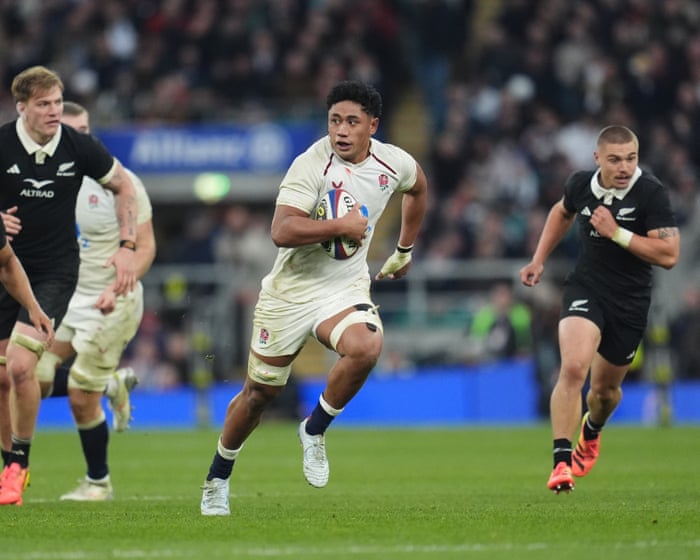
England entered the Nations Championship third‑place play‑off against New Zealand with a markedly altered starting XV. Head coach Steve Borthwick implemented five changes to the side, the most significant being the inclusion of Greg Fisilau in the back row for his first England start. The decision was taken for a fixture that, while not a final, still carries considerable weight for a team looking to finish the tournament on a high note.
A five‑change overhaul signals more than just routine rotation. It suggests that Borthwick is responding to a combination of factors – possibly injuries, the need to rest players after a demanding campaign, or a desire to inject fresh ideas against a world‑class opponent. Introducing that many new faces at once inevitably tests the squad’s cohesion; the rhythm built over previous matches will be disrupted, and the new players must quickly find the tempo required to compete with a side of New Zealand’s caliber.
The spotlight on Greg Fisilau is unavoidable. Making a debut in a high‑profile contest against the All Blacks is a baptism by fire that offers a clear signal of the coaching staff’s confidence in his abilities. Fisilau will be expected to adapt instantly to the pace and physicality of international rugby, while also delivering the specific responsibilities demanded by England’s game plan. His performance could accelerate his integration into future selections, or it could underline the challenges of stepping up at such a stage.
Borthwick’s gamble reflects a broader strategic narrative. By blending experience with new talent, he may be aiming to create a more versatile squad for the remainder of the year, especially with the next international window looming. The risk is that the lack of familiarity among the altered unit could be exploited by New Zealand, a team that thrives on disciplined, well‑drilled structures. Conversely, the unpredictability of a refreshed line‑up can unsettle an opponent accustomed to preparing for a settled England side.
Regardless of the final score, the five‑change decision and Fisalau’s debut will be dissected for clues about England’s direction. If the altered back row holds its own, it could validate Borthwick’s willingness to look beyond the established hierarchy and broaden his selection pool. If the experiment falters, it may prompt a return to a more conservative approach. The match will therefore serve as both a conclusion to this tournament and a preview of the personnel decisions that could shape England’s ambitions in the months ahead.