Barcola’s Hat‑Trick Powers Liverpool to 6‑3 Champions League Victory Over LASK
Liverpool beat LASK 6-3 in the Champions League as Bradley Barcola scored the first hat-trick of his career, while Lewis Koumas scored and Florian Wirtz shone after recent criticism.
By Naomi Osei · 14 Oct 2026 (updated 10 Nov 2026) · 2 min read
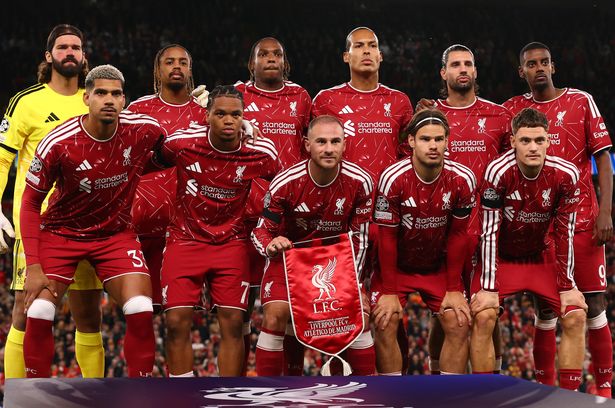 via Mirror Football
Liverpool's attacking display in the Champions League produced a 6-3 win over LASK in Austria, with French forward Bradley Barcola scoring three of the six goals. The result handed Andoni Iraola's side a second win in as many matches in the competition, after their opening victory over Atletico Madrid. Ronald Araujo headed in his first Liverpool goal to open the scoring, Jeremie Frimpong added the fourth and Lewis Koumas the sixth, while Barcola's treble was the first hat-trick of his career.
The significance of Barcola's performance goes beyond the tally. He had not scored or assisted in his first six appearances since a move from Paris Saint-Germain that could rise to £123m, so his breakthrough provides tangible validation of the investment and a fresh focal point for Liverpool's front line. A hat-trick in a Champions League fixture is a clear statement, and the fact that it came in a match where the opposition also found the net three times adds a layer of drama that will linger in post-match analysis.
A 6‑3 result inevitably raises questions about defensive solidity. Conceding three goals in a single Champions League game points to lapses that opponents can exploit, especially against teams capable of quick transitions. While the attacking output masked any shortcomings in the short term, the pattern suggests that Liverpool may need to tighten up at the back if they are to sustain progress in a competition where margins are thin.
The win was not built on Barcola alone. Lewis Koumas contributed to the scoreboard, showing that the supporting cast can complement a star performance. Additionally, Florian Wirtz made an impact that attracted attention after recent criticism, indicating that Liverpool’s midfield and wing options are also delivering when called upon. Such collective contributions hint at a balanced attack that can produce goals from multiple sources, a valuable asset in knockout football.
Looking ahead, the victory provides momentum but also a clear set of priorities. Maintaining defensive discipline while preserving the attacking fluidity displayed against LASK will be crucial. The team now has a benchmark of what it can achieve offensively, and the challenge will be to replicate that potency without the same defensive concessions. As the Champions League campaign progresses, the question will be whether Liverpool can convert this high‑scoring win into a sustained run, or if the defensive vulnerabilities exposed by LASK will prove a recurring obstacle.